
A while back I watched my home electricity bill jump noticeably after adding just one extra appliance running regularly. One appliance, in one house. Multiply that basic problem by roughly a million, add tens of thousands of scorching-hot computer chips, and you’re somewhere close to what a modern AI data centre does to the grid.
AI feels weightless when you’re the one typing the prompt. Underneath it, though, sits something entirely physical: vast industrial buildings stuffed with power-hungry chips, needing electricity every second of every day, forever. As tech firms race to build ever more powerful AI systems, finding enough reliable power has become just as urgent as finding enough microchips. That crunch is behind a genuinely strange comeback story: nuclear power, of all things, is suddenly the hottest asset in tech.
Microsoft is funding the restart of a shuttered reactor in Pennsylvania. Amazon has bought a data centre campus that sits directly next to a working nuclear plant. Meta has signed a 20-year deal tied to a reactor in Illinois. Google is bankrolling an entirely new generation of small, factory-built reactors. None of these firms is buying a power station outright — they’re buying nearby land, signing multi-decade power contracts, and pouring money into plants that might otherwise have shut for good. Electricity, in other words, has become the tech industry’s single biggest bottleneck.
Why Is This Happening Now?
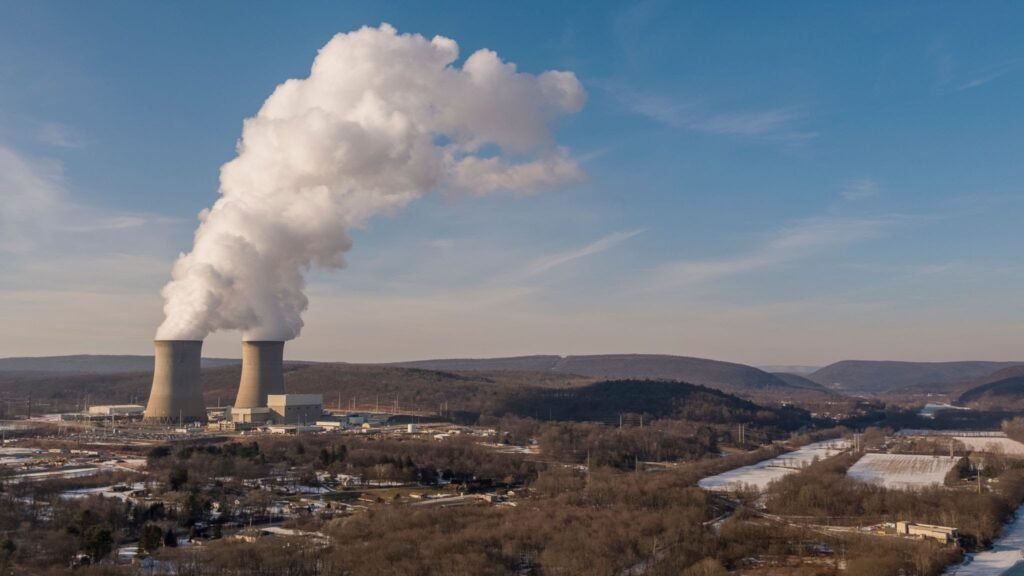
It comes down to two industries moving at wildly different speeds. A tech company can lease land and have a fully working AI data centre up within a couple of years. Upgrading the electrical grid to actually power it can take the best part of a decade.
The International Energy Agency projects that global data-centre electricity use will roughly double by 2030, driven almost entirely by AI. The industry’s central question has quietly shifted from “can we build enough chips?” to “where on earth do we find the electricity to run them?” — and that shift has rewritten the economics of ageing power stations almost overnight.
Why Do AI Data Centres Need So Much Power?
An AI data centre houses tens of thousands of specialised chips working in unison — mainly GPUs, graphics processing units, which crunch through billions of calculations every second. The electricity bill doesn’t stop at the chips themselves, either: it covers pumping millions of litres of coolant to stop everything melting, running industrial ventilation around the clock, keeping backup generators and power converters ready, and powering the high-speed networking that ties it all together.
Ordinary internet traffic ebbs and flows through the day and drops off at night. AI processing doesn’t. It runs flat-out, continuously. A single large AI campus can already draw hundreds of megawatts, and future sites are expected to need whole gigawatts — one gigawatt being roughly enough to power 750,000 homes at once. A modern AI site behaves less like an office block and rather more like an aluminium smelter.
Why Nuclear, Specifically?
Solar and wind remain central to Big Tech’s climate targets, but nuclear has three things going for it that neither can quite match.
It runs constantly. AI workloads don’t pause because the sun’s gone down or the wind’s dropped — cloud platforms are expected to work every hour of every day, and a reactor can produce steady, reliable power for months on end without stopping.
It produces electricity without burning anything. Tech firms are under real pressure to grow their computing capacity while still hitting net-zero commitments, and nuclear lets them scale up without their carbon numbers moving in the wrong direction.
And, perhaps most usefully of all, old nuclear sites already have the grid connection sorted. Building a power plant is only half the job — connecting it to the national grid through heavy-duty substations and pylons can take years of its own red tape. A retired nuclear site already has all of that infrastructure sitting there, built for exactly this kind of load. For a company facing a multi-year wait for a new connection, that existing wiring is close to priceless.
How Big Tech Is Actually Doing This
Microsoft and Three Mile Island. In September 2024, Microsoft signed a 20-year deal with Constellation Energy to underwrite the restart of Three Mile Island’s Unit 1 — the reactor next to the one involved in the infamous 1979 accident, though the two are entirely separate units. Unit 1 ran safely for decades before closing in 2019, purely because it couldn’t compete financially with cheap natural gas at the time. Constellation is putting $1.6 billion into refurbishing it, aiming to bring roughly 835 megawatts back onto the grid — enough for around 800,000 homes — and has since renamed the site the Crane Clean Energy Center. It was originally pencilled in for 2028; more recent reporting suggests it could land a year earlier, in 2027. In a sign of how seriously Washington is taking this, the US Department of Energy stepped in with a further $1 billion loan towards the restart in late 2025.
Amazon’s Susquehanna move. AWS took a more direct route, buying a data-centre campus for $650 million, sitting right next to the Susquehanna nuclear plant in Pennsylvania, with power drawn straight from the facility rather than through the wider public grid. It hasn’t been entirely smooth: in late 2024, US energy regulators actually blocked Amazon’s request to draw more power this way, after other utilities argued it would unfairly shift grid costs onto everyone else — a useful reminder that “just plug in next to a reactor” isn’t quite as simple as it sounds. Amazon has since restructured the arrangement and expanded it considerably, committing to a $20 billion investment in Pennsylvania alongside a much larger long-term power agreement with Talen Energy running out to 2042.
Meta’s rescue deal. In Illinois, Meta signed a 20-year contract to stop Constellation’s Clinton Clean Energy Center from closing, guaranteeing the roughly 1,100-megawatt plant enough long-term revenue to stay open and fund upgrades to expand its output.
Google and the mini-reactors. Rather than reviving an old plant, Google is betting on the future, signing a deal with Kairos Power to buy electricity from a new generation of Small Modular Reactors — smaller, standardised units built in a factory and delivered by lorry rather than constructed from scratch on site over a decade. Google’s first one is pencilled in for around 2030, intended as a repeatable template for dedicated AI power rather than a one-off.
So How Does the Electricity Actually Get to the Servers?
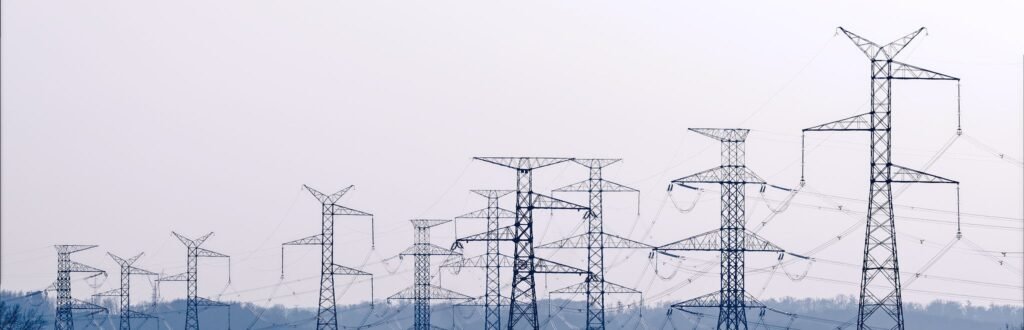
It’s tempting to picture a thick cable running straight from a cooling tower into a server rack. Amazon’s setup gets close to that, but most of these deals actually work through the ordinary regional grid. The nuclear plant feeds power into that grid as normal; the data centre draws power from the same grid as normal; and a long-term financial contract ties the two together, so the tech firm’s bill is linked directly to the plant’s clean output.
Once electricity is on the grid, the electrons themselves are just electrons — there’s no such thing as a “Microsoft electron” travelling down a dedicated wire. What the contract actually guarantees is that for every megawatt the data centre draws, a matching megawatt of clean nuclear power goes into the network to cover it.
What Could Slow This Down?
It isn’t a done deal by any means. Restarting a dormant reactor costs genuinely eye-watering sums in replacement parts, safety inspections and fresh fuel. Nuclear regulators, sensibly, don’t move at Silicon Valley speed, and approvals for restarts or new reactor designs can take years to clear. And there’s a real, live political fight brewing too — Amazon’s Pennsylvania case is a good example, where regulators sided with the argument that a tech giant drawing huge amounts of power from a local grid connection could quietly push costs onto everyone else’s electricity bill. Expect more of that argument, not less, as more of these deals get signed.
Frequently Asked Questions
Did Microsoft buy Three Mile Island? No. Microsoft signed a 20-year agreement to buy the electricity the plant generates. Constellation Energy still owns, runs, and is entirely responsible for the facility itself.
Why don’t tech companies just rely on solar and wind? They’re a genuine part of the picture, but they’re variable — dependent on weather and time of day. AI data centres run around the clock and need a continuous, guaranteed baseline of power, which is exactly what nuclear supplies natively and renewables, on their own, can’t.
Are these data centres exposed to radiation risk? No. They sit outside the plant’s secured perimeter and simply draw electricity from its infrastructure, the same as any other industrial customer connected nearby.
The New Battleground
The decisive fights in AI increasingly aren’t happening in software labs or chip factories. They’re happening on the power grid. As AI infrastructure balloons to a genuinely enormous scale, clever software has run straight into the limits of physical reality, and Microsoft, Amazon, Meta and Google are all discovering that owning the future of tech means securing the kind of massive, continuous power supply that used to belong to an entirely different era of industry.
The next winner in AI won’t just be whoever has the cleverest model. It’ll be whoever actually has the power plugged in to run it.