

You have probably heard people talk about Bitcoin, cryptocurrency, or simply crypto. You may also have heard that crypto is different from normal money because it is “digital money” rather than physical cash.
That can sound strange at first.
After all, cryptocurrency is not something you can hold in your hand like a banknote, gold coin, silver bar, or gemstone. It exists on computer networks. So the obvious beginner question is:
How can something that is not physical have real value?
I remember asking myself the same question years ago.
Around 2015, a friend advised me to invest in Bitcoin mining. He told me it could be an easy investment and that I only needed a device to do the work. I asked him what Bitcoin actually was, and he gave me the usual explanation people often give: digital money, decentralised, not controlled by banks, and so on.
Honestly, I did not understand it.
I could not comprehend how money that was not issued by a government could have value. I also could not understand how it was not simply a scam. So I did not invest ! , I know a huge mistake !
Years later, after Bitcoin’s price had multiplied many times, another friend asked me: “What is Bitcoin? How can a digital asset that you cannot touch have value?”
At the time, my answer was not great. I said something like: “Well, you use a bank card to buy things even though you are not holding physical cash.”
That answer was partly true, but it did not really explain cryptocurrency.
The explanation that finally made sense to me was much simpler: humans decide what is valuable based on trust, usefulness, scarcity, supply, and demand.
Throughout history, people have used many things as money. In parts of West Africa and Asia, for example, cowrie shells were used as a form of payment because they were portable, recognisable, durable, and accepted by communities.
So the real question is not only “Can I touch it?”
The better question is:
Why do people agree that something has value?
That is the question this guide will answer.
What Is Cryptocurrency in Simple Words?
In simple words, crypto is a form of digital value. You cannot physically hold a Bitcoin, but ownership of that Bitcoin can be recorded and transferred online.
Most cryptocurrencies use a technology called a blockchain.
A blockchain is like a shared digital record book. It records transactions across many computers instead of depending on one central bank or company.
For example, if Person A sends crypto to Person B, the blockchain records: who sent it
, who received it
, when the transaction happened
and which wallet addresses were involved
.
Once the transaction is confirmed, it becomes part of the public record. The important idea is that no single person can easily change that record without the network noticing.
That is one reason people describe blockchains as transparent and difficult to tamper with.
Why and When Did Cryptocurrency Start?
Modern cryptocurrency began with Bitcoin, but the dream of digital money is older.

To understand cryptocurrency, it helps to know why it was created.
Before Bitcoin, computer scientists and cryptography enthusiasts had already tried to create forms of internet-based money. The big problem was this:
If money is just digital information, what stops someone from copying it and spending the same coin twice? , This is called double-spending problem.
With normal bank payments, the bank acts as the middleman. If you send money to someone, the bank updates the records and makes sure you cannot spend the same money twice.
But early digital money systems struggled with this question:
How can people send value online without needing one central authority to approve every transaction? Well, Bitcoin offered a solution !
In October 2008, during the global financial crisis, a person or group using the name Satoshi Nakamoto published the Bitcoin white paper. It described a peer-to-peer electronic cash system that allowed people to send online payments directly without relying on a central financial institution for every transaction.
Bitcoin officially launched in January 2009. The first block, known as the Genesis Block, was created, and the first Bitcoin transaction happened shortly after.
So the main purpose behind Bitcoin was not just to create “internet money”. It was to create a system where value could move online without total dependence on banks, governments, or central payment companies.
How Does Cryptocurrency Work?

Cryptocurrency works through three main parts: Wallets
,Blockchains
and Transactions
A wallet does not actually store crypto like a leather wallet stores cash. Instead, it stores the keys that allow you to access and control your crypto on the blockchain, a blockchain records transactions and a transaction happens when crypto moves from one wallet address to another.
Here is a simple example: You create a crypto wallet, your wallet gives you a public address ,when someone sends crypto to that address , so the network checks the transaction, the transaction is added to the blockchain and your wallet balance updates.
The most important beginner warning is this:
If you lose access to your wallet keys or recovery phrase, you may lose access to your crypto permanently !!
That is very different from forgetting a normal bank password. With a bank, you can usually prove your identity and reset access. With crypto, there may be no customer service team that can recover your funds.
Why Does Cryptocurrency Have Value?
Cryptocurrency has value because people are willing to buy it, hold it, use it, trade it, or build with it.
The basic reason is supply and demand.
If more people want to buy a cryptocurrency than sell it, the price can rise. If more people want to sell than buy, the price can fall.
But demand does not appear from nowhere. It is usually affected by several factors.
- Limited Supply
Scarcity can make an asset seem more valuable. Bitcoin, for example, is designed to have a maximum supply of 21 million coins. This does not automatically make Bitcoin valuable, but it does create digital scarcity.
That scarcity is one reason some people compare Bitcoin to “digital gold”. - Usefulness
A cryptocurrency may become more valuable if people use it for real purposes.
For example, some blockchains allow developers to build apps, smart contracts, tokens, games, financial tools, and other digital services.
If a network has real users and useful applications, demand for its coin or token may increase. - Trust
Trust matters in every money system. People use normal currency because they trust that others will accept it. People buy gold because they trust that others will continue to value it. The same applies to crypto.
If users trust the network, developers, security, and long-term purpose, confidence can grow.
If trust disappears, the price can collapse. - Security
A secure network is more credible. If a blockchain is difficult to attack, has strong technology, and has a long record of working properly, more people may trust it.
On the other hand, weak projects, hacked platforms, or poorly designed tokens can quickly lose credibility. - Liquidity
Liquidity means how easily something can be bought or sold. If a cryptocurrency is listed on major exchanges and has many buyers and sellers, it is easier to trade. That can attract more users and investors , If a coin is hard to sell, people may avoid it. - Community Support
Community can be powerful in crypto. Some cryptocurrencies grow because they have active miners, developers, node operators, investors, educators, and online supporters.
A strong community can increase awareness, answer beginner questions, improve software, and keep the project alive. - Speculation
Speculation is also a major reason crypto prices move. Many people buy crypto because they believe the price will increase in the future. Sometimes they are right. Sometimes they are very wrong.
This is why crypto can rise quickly during hype and crash quickly when confidence disappears.
What Is Market Cap in Cryptocurrency?
Market cap is a simple way to estimate the total value of a cryptocurrency. The formula is:
Market Cap = Current Price × Circulating Supply
In simple words:
Market Cap = Price of One Coin × Number of Coins in Circulation
For example, imagine a cryptocurrency has: 20,000,000 coins in circulation
, each coin is worth $60,000
The market cap would be:
20,000,000 × $60,000 = $1.2 trillion
Market cap helps beginners compare the size of different cryptocurrencies. This is important because a coin with a low price is not always cheap.
For example: Coin A costs $1,000 and has 1 million coins and Coin B costs $1 and has 10 billion coins.
Coin A market cap:
$1,000 × 1,000,000 = $1 billion
Coin B market cap:
$1 × 10,000,000,000 = $10 billion
Even though Coin B costs only $1, it is actually larger by market
Main Types of Cryptocurrency
Not all cryptocurrencies are created for the same purpose. Here are some of the main types beginners should know.
- Payment Coins
Payment coins are designed to work like digital money. The most famous example is Bitcoin. It can be sent between wallets without needing a bank to process the payment. However, not all payment coins are widely accepted in everyday shops, and prices can be volatile. - Platform Coins and Utility Tokens
Some cryptocurrencies are used to power blockchain platforms. For example, Ethereum allows developers to build decentralised apps and smart contracts.
A smart contract is a piece of code that runs automatically on a blockchain when certain conditions are met. - Stablecoins
Stablecoins are cryptocurrencies designed to follow the value of another asset, usually the US dollar.
For example, some stablecoins aim to stay close to $1.
Common examples include Tether and USD Coin.
Stablecoins can be useful for trading, payments, and moving money between crypto platforms, but they are not risk-free. Their safety depends on how they are backed, managed, and regulated. - Governance and DeFi Tokens
Some tokens give holders voting rights in a crypto project.
These are often used in DeFi, which means decentralised finance. DeFi platforms try to recreate financial services such as lending, borrowing, and trading using blockchain technology.
An example is Uniswap, which has a governance token called UNI. - Meme Coins
Meme coins are often created from internet jokes, online communities, or social media trends.
Examples include Dogecoin and Shiba Inu.
Some meme coins have grown huge communities, but they can also be extremely risky because their value often depends heavily on hype.
Is Cryptocurrency Risky?
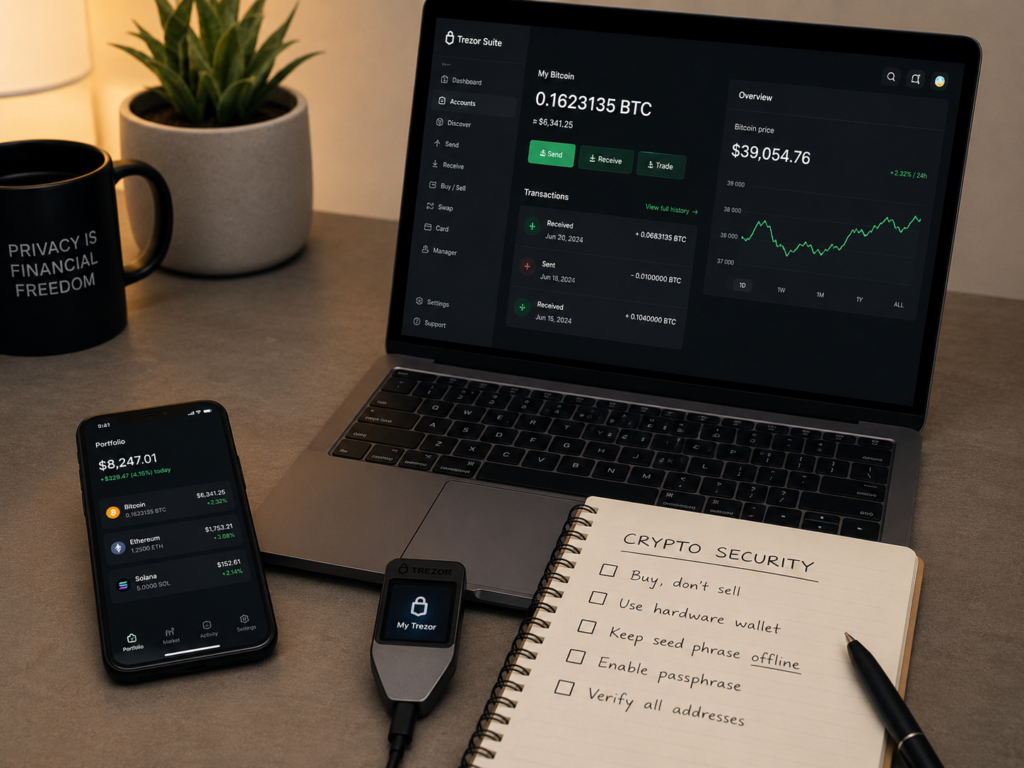
Yes. Cryptocurrency can be extremely risky. Prices can rise quickly, but they can also fall sharply. Some coins lose most of their value. Some disappear completely. Some are scams from the beginning.
Crypto risks include: sudden price crashes
, scams and fake projects
,hacked exchanges
,lost wallet keys
,fake investment schemes
, regulation changes
,market manipulation
like : pump-and-dump schemes
,emotional buying during hype
and lack of normal investor protection.
Unlike money in a regulated bank account, crypto may not come with the same safety nets. If you send crypto to the wrong address, lose your recovery phrase, or fall for a scam, it may be impossible to recover your money.
For beginners, the safest rule is simple:
Do NOT start with money you cannot afford to lose.
If someone is learning, a tiny amount can help them understand wallets, fees, exchanges, and transactions without creating a serious financial burden. But crypto should never replace emergency savings, rent money, bills, or essential family expenses.
Helpful Cryptocurrency Tools and Resources
Use trusted tools and official education sources instead of relying only on social media influencers.
- Global: CoinMarketCap (tracks prices, market caps, and supply data)
- Global: CoinGecko (independent crypto market data and categories)
- United States: Investor.gov Crypto Assets (official SEC investor education)
- United States: Coinbase Learn (beginner-friendly crypto education)
- UK & Europe: FCA Warning List (checks risky or unauthorised firms)
- UK & Europe: FCA Cryptoasset Register (checks UK-registered crypto firms)
These tools can help you research, compare, and avoid obvious red flags before taking action.
How to Evaluate a Cryptocurrency Before Buying
Do not buy a coin just because someone on TikTok, Reddit, YouTube, or X says it will explode.
Use a simple checklist first.
Instead ask yourself : What problem does it solve?, Who created it?, Is the team public or anonymous?, How many coins exist?,How are new coins created? ,Is there real usage?,Is the project open source? ,Is most of the supply controlled by insiders?
If the only reason to buy a coin is “the price might go up”, that is speculation.
Speculation is not automatically wrong, but you should recognise it for what it is. You are betting on future demand, not buying something with guaranteed value.
Cryptocurrency and the Cowrie Shell Example
The cowrie shell example helps explain why crypto can have value.
Cowrie shells were used as money in different parts of the world because people accepted them as valuable. They were portable, recognisable, durable, and not easy for everyone to produce in unlimited quantities.
Bitcoin is obviously not a shell. It is digital. But some of the same value principles apply.
People may value Bitcoin because:
- it has limited supply
- it can be transferred online
- it is recognised globally
- it does not require a bank account to hold
- it has a large network of users
- it has a long track record compared with other cryptocurrencies
In other words, value is not only about physical touch.
Gold has value because people trust it, desire it, and accept it. Paper money has value because governments issue it and society accepts it. Cowrie shells had value because communities agreed to use them.
Crypto works in a similar human way: its value depends on whether people continue to trust, use, buy, and accept it.
FAQ
What is cryptocurrency in simple words?
Cryptocurrency is a digital asset that uses blockchain technology to record ownership and transactions. It can be used for payments, apps, investing, or speculation, depending on the project.
When did cryptocurrency start?
Modern cryptocurrency started with Bitcoin. The Bitcoin white paper was published in 2008, and the Bitcoin network began in January 2009 with the creation of the first block.
Why was cryptocurrency created?
Cryptocurrency was created to allow peer-to-peer digital payments, solve the double-spending problem, create digital scarcity, and reduce reliance on central financial intermediaries.
How does cryptocurrency get its value?
Cryptocurrency gets value from supply and demand, scarcity, usefulness, trust, security, liquidity, community interest, and speculation. If people stop wanting a coin, its price can fall sharply.
Can cryptocurrency lose all its value?
Yes. A cryptocurrency can lose most or all of its value if demand disappears, the project fails, the technology breaks, regulation changes, or people lose trust.
Conclusion
Cryptocurrency can seem confusing because it challenges the way most people think about money.
It is not physical cash. It is not gold. It is not issued in the same way as normal government currency. But that does not mean it has no value.
Crypto gets value from human behaviour: trust, demand, scarcity, usefulness, security, community, and speculation.
Bitcoin was created to allow people to send value online without relying completely on banks or central authorities. Since then, the crypto world has grown into a huge market with payment coins, smart contract platforms, stablecoins, DeFi tokens, and meme coins.
For beginners, the most important lesson is simple:
Understand before you buy.
Crypto can be interesting technology, but it is also risky. Learn the basics, use trusted resources, avoid hype, protect your wallet, and never risk money you cannot afford to lose.