

Your gut does far more than digest food—it directly affects how you feel, think, and perform mentally.
Research shows that your gut and brain are constantly communicating. When your gut health is poor, it can lead to low mood, brain fog, and reduced focus. Improve it, and you may feel sharper, calmer, and more energised.
What Is the Gut-Brain Connection?
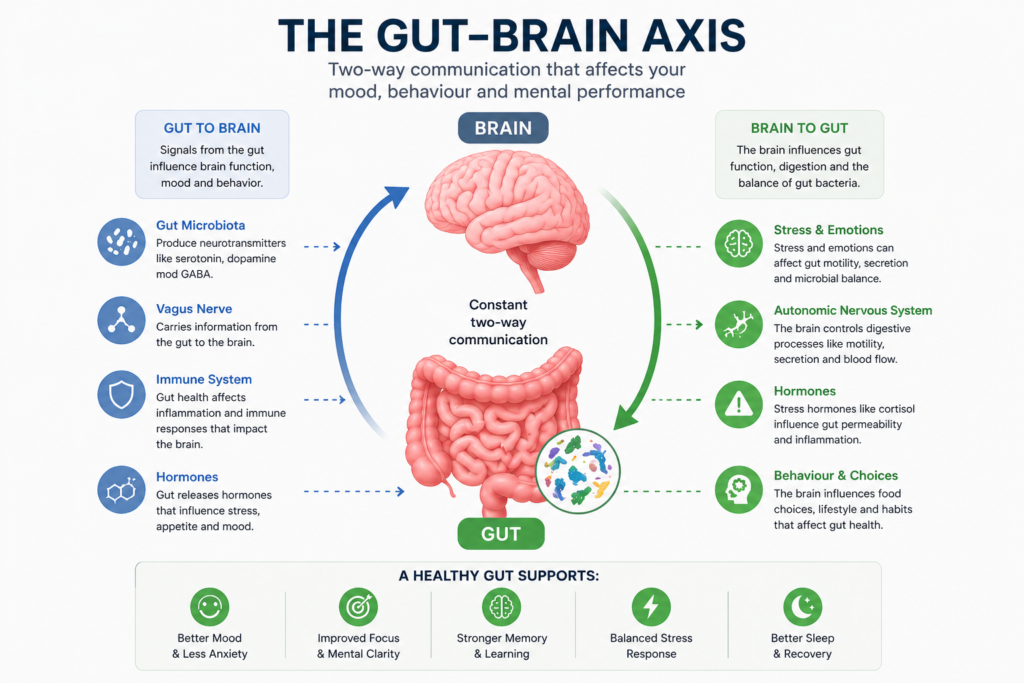
The Gut-Brain Axis is the link between your digestive system and your brain.
It works through:
- Nerve signals (via the vagus nerve)
- Hormones
- Gut bacteria (microbiome)
Simple definition:
The gut-brain connection is how your gut and brain constantly communicate and influence each other.
Why Gut Health Affects Your Mood
Your gut produces many chemicals that affect how you feel.
Key Facts
- Around 90% of serotonin (the “feel-good” hormone) is produced in the gut
- Gut bacteria influence stress, anxiety, and mood
- Poor gut health can increase inflammation, affecting brain function
Scenario:
If your gut is unbalanced, you may feel:
- More anxious
- Low in energy
- Mentally foggy
How Gut Health Impacts Mental Performance
Your brain depends on signals from your gut.
1. Focus and Concentration
A healthy gut improves clarity and attention.
Example:
People with balanced gut bacteria often report better concentration during work or study sessions.
2. Memory and Learning
Gut health supports cognitive function.
Scenario:
A diet rich in fibre and probiotics can improve memory retention over time.
3. Stress and Anxiety Levels
Gut imbalance can increase stress signals.
Example:
High sugar intake may disrupt gut bacteria, leading to mood swings.
4. Energy Levels
Your gut helps regulate energy production.
Scenario:
Poor digestion can lead to fatigue even if you sleep well.
Signs Your Gut Health May Be Affecting Your Mood
Watch for these common signs:
- Frequent bloating or digestive discomfort
- Brain fog or difficulty focusing
- Low mood or irritability
- Poor sleep quality
- Low energy despite rest
These signals often indicate an imbalance in your gut microbiome.
How to Improve Gut Health (Step-by-Step)
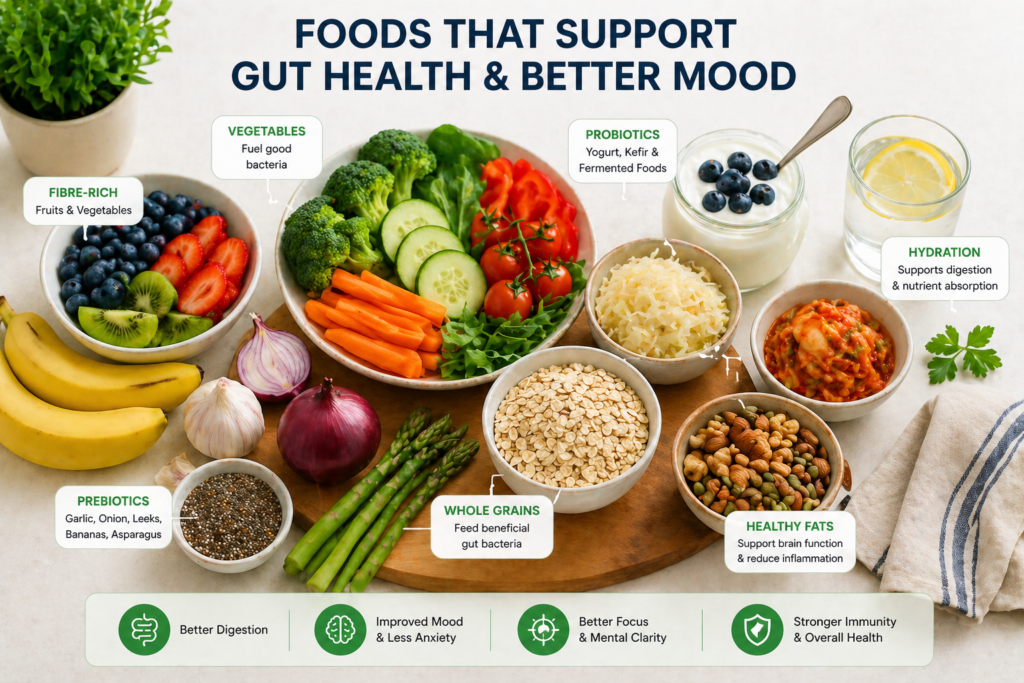
1. Eat More Fibre-Rich Foods
Fibre feeds beneficial gut bacteria.
Examples:
- Vegetables
- Whole grains
- Fruits
Scenario:
Adding fibre daily can improve digestion within 1–2 weeks.
2. Include Probiotic Foods
Probiotics introduce healthy bacteria.
Examples:
- Yogurt
- Kefir
- Fermented foods
3. Reduce Processed Foods and Sugar
Processed foods harm gut balance.
Scenario:
Reducing sugar intake by 20–30% can improve gut health over time.
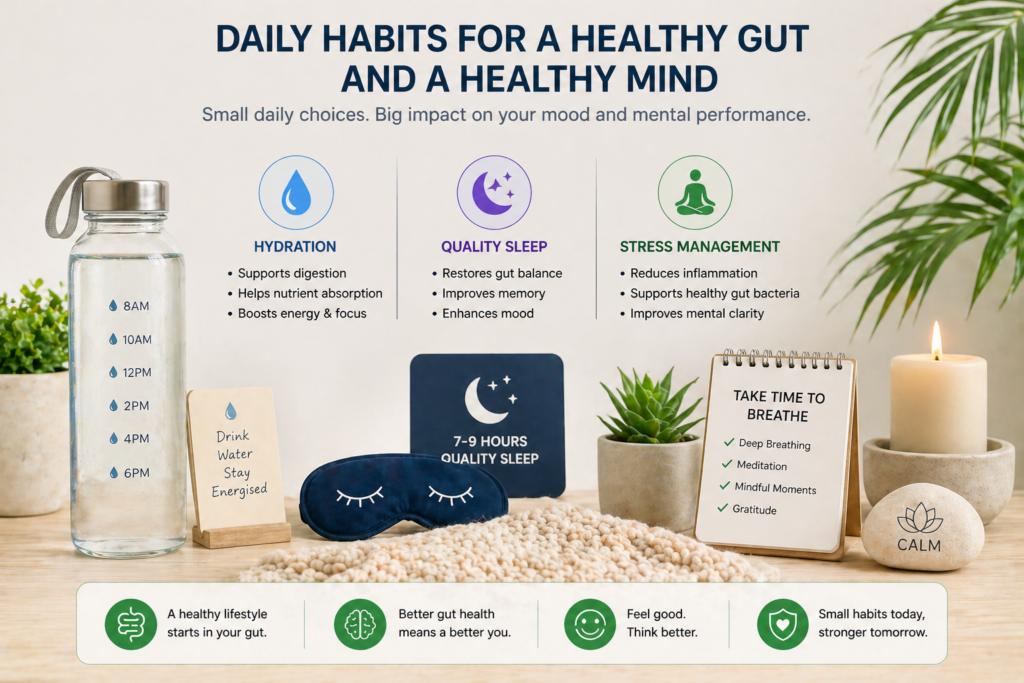
4. Stay Hydrated
Water supports digestion and nutrient absorption.
Simple rule:
Drink enough to maintain consistent energy throughout the day.
5. Manage Stress
Stress directly impacts your gut.
Example tools:
- Headspace – guided relaxation
- Calm – stress reduction
6. Improve Sleep Quality
Sleep helps regulate gut bacteria.
Scenario:
Getting 7–8 hours of sleep improves both gut and brain function.
Real Examples of Gut-Brain Improvement
Example 1: Diet Change
Switching to whole foods:
- Improved digestion in 2 weeks
- Better mood within 3–4 weeks
Example 2: Daily Routine Upgrade
Adding:
- 20 minutes exercise
- 10 minutes meditation
Result:
- Reduced stress
- Improved focus
Example 3: Hydration and Sleep
Increasing water intake and sleep:
- Energy levels improve within days
- Brain fog reduces significantly
Best Tools to Support Gut and Mental Health
🌍 Global
- MyFitnessPal – track food intake
- Headspace – manage stress
- Calm – improve sleep
🇺🇸 United States
- Noom – behaviour-based nutrition
- BetterHelp – mental support
🇬🇧 UK / Europe
- NHS App – access health advice
- Lifesum – track diet quality
⚙️ Advanced Users
- Cronometer – detailed nutrient tracking
- Oura Ring App – optimise sleep patterns
Common Mistakes to Avoid
- Eating too much processed food
- Ignoring stress levels
- Skipping sleep
- Overusing antibiotics without guidance
Better approach:
Focus on small, consistent improvements.
FAQ
Can gut health really affect your mood?
Yes. The Gut-Brain Axis directly influences mood through hormones and nerve signals.
How long does it take to improve gut health?
Most people notice changes within 2–4 weeks with consistent habits.
What foods improve gut health?
Fibre-rich foods, probiotics, and whole foods support a healthy gut.
Can poor gut health cause anxiety?
It can contribute to increased stress and anxiety due to chemical imbalances.
Is gut health linked to brain fog?
Yes. Poor gut health can lead to inflammation and reduced mental clarity.
Conclusion
Your gut health plays a major role in how you feel and think every day. By improving your diet, managing stress, and building better habits, you can boost both your mood and mental performance.
Start small—one healthy habit today can lead to noticeable improvements in just a few weeks.