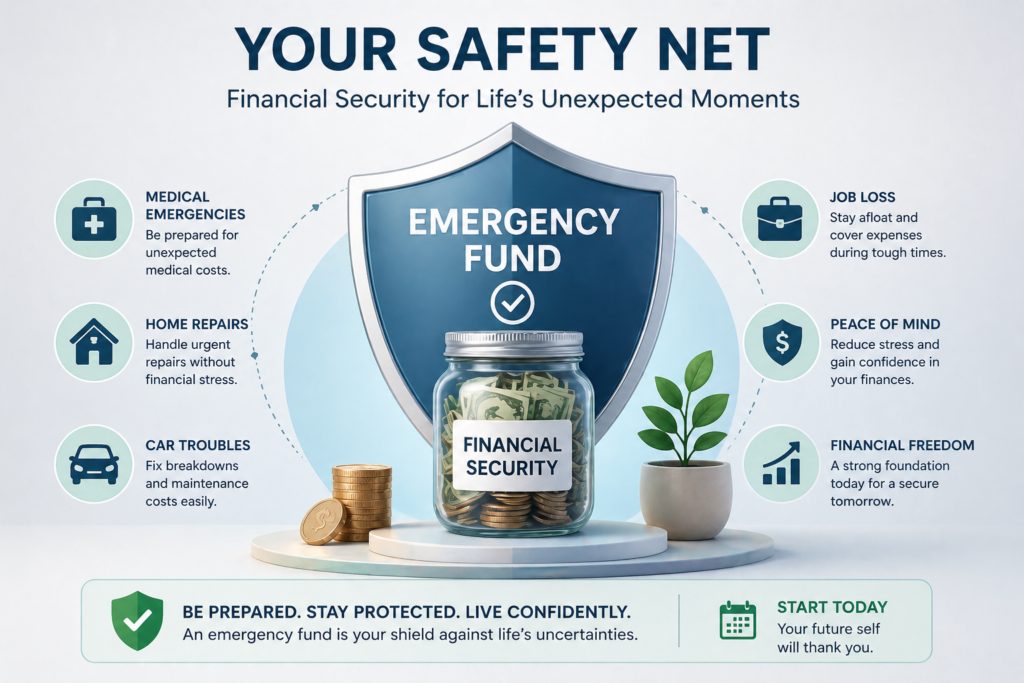

Unexpected expenses can hit at any time—car repairs, medical bills, or job loss. Without savings, even a $300–$1,000 emergency can create serious financial stress.
That’s where an emergency fund comes in. It acts as your financial safety net, helping you stay stable without going into debt.
What Is an Emergency Fund?
An emergency fund is money set aside specifically for unexpected expenses.
It is not for:
- Shopping
- Holidays
- Everyday spending
It is only for real emergencies like:
- Medical bills
- Urgent home repairs
- Loss of income
Simple definition:
An emergency fund is a dedicated savings buffer that protects you from financial shocks.
Why Emergency Funds Are Essential
Having an emergency fund gives you control and stability.
Key Benefits
- Avoid high-interest debt (credit cards, loans)
- Reduce financial stress
- Handle unexpected expenses confidently
- Maintain your lifestyle during emergencies
Scenario:
Without savings, a $800 car repair might go on a credit card with 20% interest.
With an emergency fund, you pay it instantly—no debt.
How Much Should You Save?
The ideal emergency fund depends on your situation.
Starter Goal (Beginner)
- $500–$1,000
- Covers small emergencies
Standard Goal
- 3–6 months of living expenses
Example:
- Monthly expenses = $2,000
- Emergency fund target = $6,000–$12,000
Start small and build over time.
How to Build an Emergency Fund Fast (Step-by-Step)
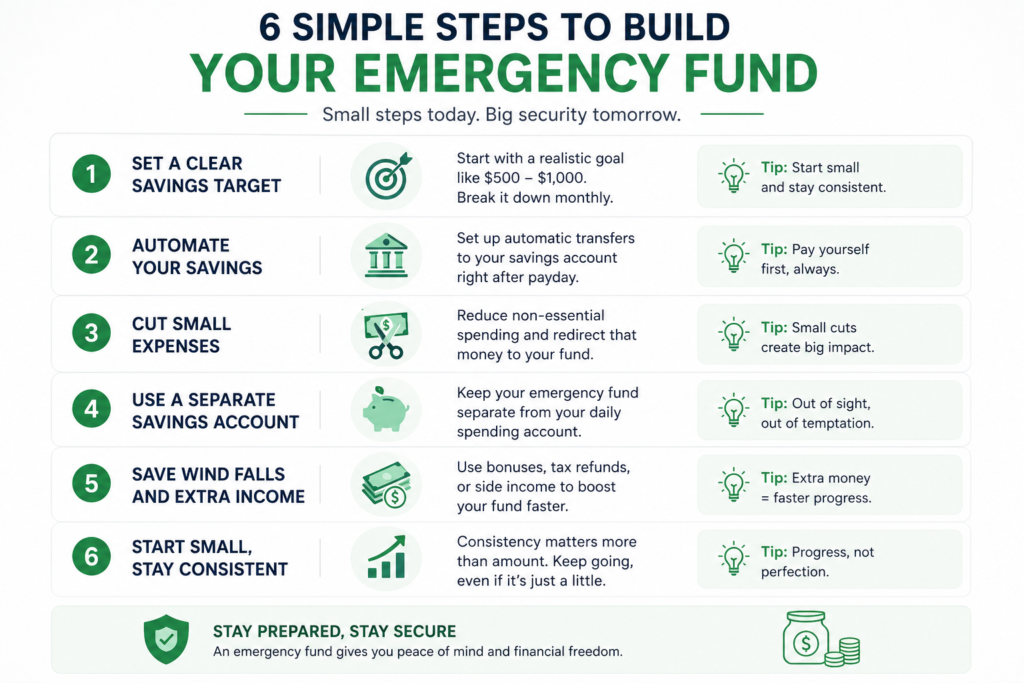
1. Set a Clear Savings Target
Start with a realistic goal.
Example:
- Save $1,000 in 3 months
- That’s about $330/month
Breaking it down makes it manageable.
2. Automate Your Savings
Make saving effortless.
How:
- Set automatic transfers after payday
Example:
Saving 15% of a $2,000 income = $300/month
Apps like Plum can automate this process.
3. Cut Small Expenses Temporarily
Focus on quick wins.
Examples:
- Reduce takeaway meals
- Cancel unused subscriptions
- Lower energy usage
Scenario:
Cutting $100–$200 monthly can help you reach your goal faster.
4. Use a Separate Savings Account
Keep your emergency fund separate from daily spending.
Why:
- Reduces temptation
- Keeps funds organised
Example tools:
- Monzo – savings pots
- Revolut – separate vaults
5. Save Windfalls and Extra Income
Use unexpected money wisely.
Examples:
- Bonuses
- Tax refunds
- Side income
Scenario:
Adding a $500 bonus directly to your fund speeds up progress significantly.
6. Start Small, Stay Consistent
Consistency matters more than amount.
Example plan:
- Week 1–4 → save $50/week
- Month 2–3 → increase to $75/week
This builds momentum without pressure.
Real Example: Building $1,000 in 3 Months
Here’s a simple breakdown:
- Cut expenses: $150/month
- Save automatically: $200/month
- Add extra income: $100/month
Total monthly savings: $450
3 months total: $1,350
This shows how small actions combine into real results.
Best Tools to Build Your Emergency Fund
🌍 Global
- Plum – automatic saving rules
- Revolut – savings vaults
- YNAB – control spending
🇺🇸 United States
- Chime – automatic savings features
- Ally Bank – high-yield savings
🇬🇧 UK / Europe
- Monzo – savings pots
- Starling Bank – easy savings goals
⚙️ Advanced Users
- Microsoft Excel – custom tracking
- Notion – financial dashboards
Common Mistakes to Avoid
- Not separating emergency funds
- Using savings for non-emergencies
- Trying to save too much too fast
- Not starting at all
Better approach:
Start small and build gradually.
FAQ
How much should I have in an emergency fund?
Start with $500–$1,000, then aim for 3–6 months of expenses.
Where should I keep my emergency fund?
In a separate, easy-access savings account—not cash or risky investments.
Can I invest my emergency fund?
No. Emergency funds should be safe and accessible, not invested.
How fast should I build an emergency fund?
Aim to build a starter fund within 1–3 months, then grow it gradually.
What counts as an emergency?
Unexpected, necessary expenses like medical bills, repairs, or job loss.
Conclusion
An emergency fund is one of the most important financial tools you can build. It protects you from stress, debt, and unexpected setbacks.
Start today—even if it’s just $20–$50. With consistency, you can build a strong safety net faster than you think.