

Building a personal finance system doesn’t have to be complicated. In fact, the simpler it is, the more likely you are to stick with it.
A well-designed personal finance system helps you control your money, reduce stress, and consistently build wealth—even if you’re starting from scratch. In this guide, you’ll learn exactly how to create a system that actually works, using practical steps and real tools.
What Is a Personal Finance System?
A personal finance system is a structured way to manage your money automatically and consistently.
It typically includes:
- Tracking income and expenses
- Budgeting monthly spending
- Saving and investing regularly
- Reviewing finances periodically
The goal is simple: make smart money decisions without overthinking every transaction.
Why Most Budgeting Systems Fail
Many people abandon budgeting systems within weeks. The main reasons include:
- Too complicated (too many categories or rules)
- Requires daily tracking
- No automation
- Unrealistic expectations
For example, if you try to track every £2 coffee manually, you’ll likely give up. A better system focuses on simplicity and automation.
How to Build a Simple Personal Finance System (Step-by-Step)
1. Know Your Numbers (Income & Expenses)
Start with clarity. Calculate:
- Monthly income (after tax)
- Fixed expenses (rent, bills, subscriptions)
- Variable expenses (food, transport, shopping)
Example:
If you earn $3,000 monthly:
- Fixed costs: $1,500
- Variable spending: $800
- Remaining: $700
This $700 is your opportunity to save and invest.
2. Use a Simple Budgeting Framework
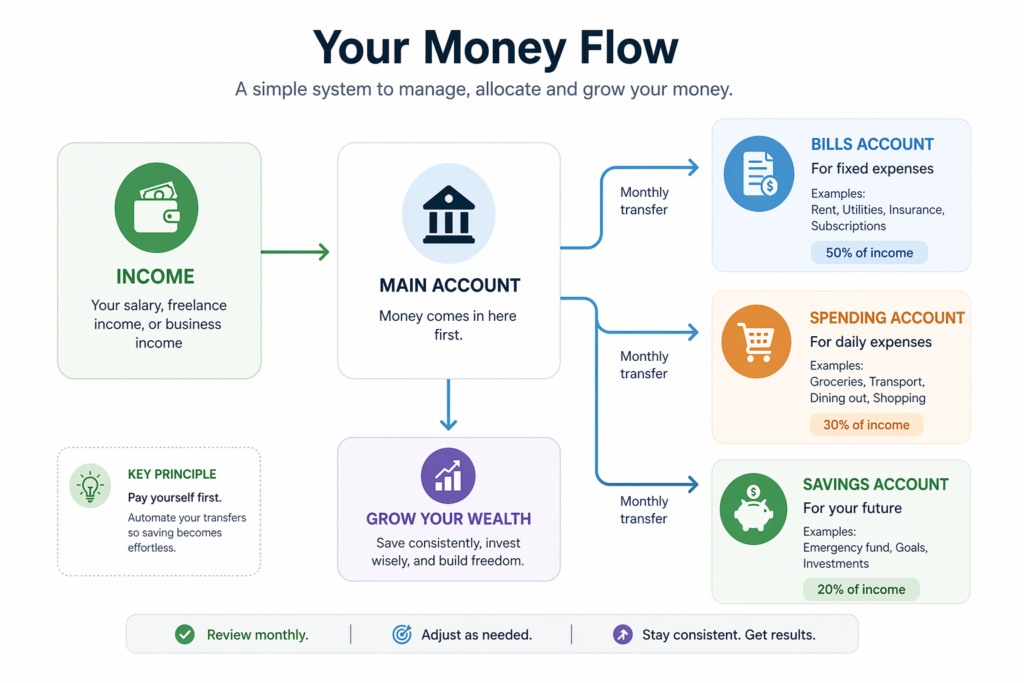
A practical and beginner-friendly system is the 50/30/20 rule:
- 50% → Needs (rent, bills, groceries)
- 30% → Wants (entertainment, dining out)
- 20% → Savings & investments
Example:
$3,000 income:
- $1,500 needs
- $900 wants
- $600 savings
If 20% feels too high, start with 10–15% ($300–$450) and increase gradually.
3. Automate Your Finances
Automation removes decision fatigue and ensures consistency.
Set up:
- Automatic transfers to savings accounts
- Direct debits for bills
- Scheduled investments
Example setup:
- Payday → Transfer $300 to savings
- $200 → Investment account
- Remaining → spending account
This ensures you save before you spend.
4. Separate Your Accounts
Using multiple accounts simplifies money management.
A basic structure:
- Main account: income + bills
- Spending account: daily expenses
- Savings account: emergency fund
Example:
- Keep $1,500 in main account for bills
- Transfer $800 to spending
- Save $700 automatically
This prevents overspending without constant tracking.
5. Build an Emergency Fund First
Before investing, create a safety net.
Target:
- 3–6 months of essential expenses
Example:
If your monthly essentials are $1,500:
- Minimum: $4,500
- Ideal: $9,000
Start small:
- Save $100–$300 monthly until you reach your goal
This protects you from debt during unexpected situations.
6. Start Investing (Even Small Amounts)
Once your emergency fund is underway, begin investing.
You don’t need thousands to start:
- Begin with $50–$200 monthly
Example platforms:
- Index funds (low-cost, long-term growth)
- ETFs (diversified investments)
Consistency matters more than amount. Investing $200 monthly at 7% annual return can grow significantly over time.
Best Tools to Build Your Personal Finance System
🌍 Global Tools
- YNAB (You Need A Budget) – proactive budgeting system
- Revolut – multi-account money management
- Wise – low-cost international transfers
🇺🇸 United States
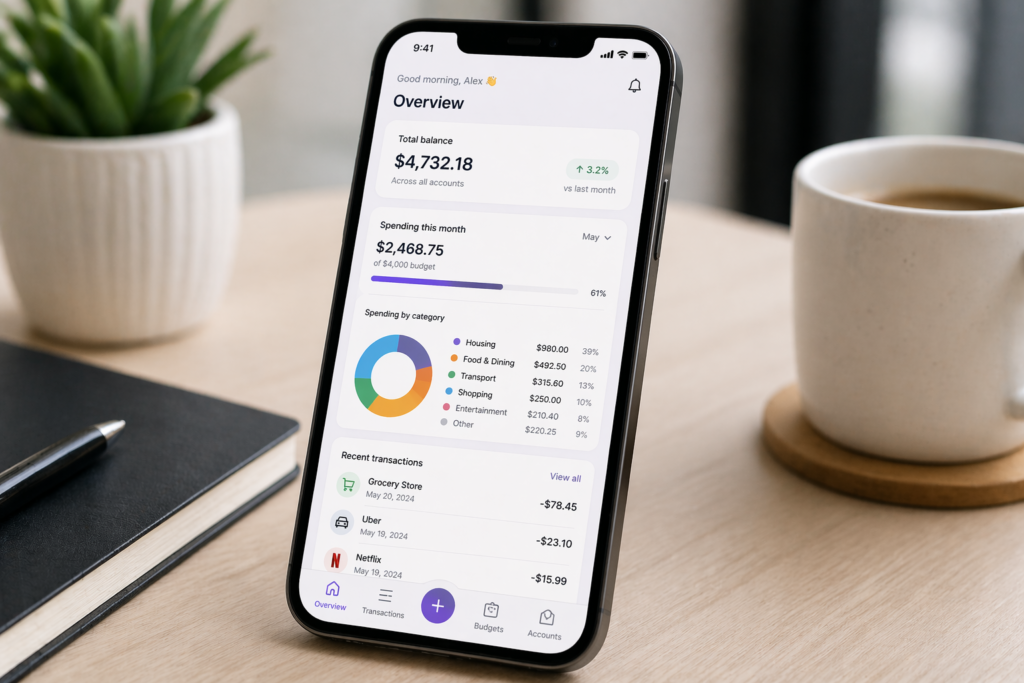
- Mint – automatic expense tracking
- Personal Capital – investment tracking + net worth
- Rocket Money – subscription management
🇬🇧 UK / Europe
- Monzo – smart budgeting with spending insights
- Starling Bank – fee-free banking + savings spaces
- Emma – tracks subscriptions and expenses
⚙️ Advanced Users
- Notion – custom finance dashboards
- Excel / Google Sheets – full control and flexibility
How to Stick to Your System Long-Term
The best system is one you actually use.
Follow these principles:
- Keep it simple (3–5 categories max)
- Automate as much as possible
- Review once per week (10–15 minutes)
- Adjust monthly, not daily
Example routine:
- Sunday: check spending
- Month-end: adjust budget
- Quarterly: review savings goals
Common Mistakes to Avoid
- Overcomplicating your system
- Tracking every small expense obsessively
- Ignoring irregular costs (annual bills)
- Not reviewing your finances regularly
A system should reduce stress—not create it.
FAQ
What is the easiest personal finance system for beginners?
The easiest system is a simple automated budget using the 50/30/20 rule, combined with separate accounts for spending, saving, and bills.
How much should I save each month?
Aim to save 10–20% of your income, or around $100–$500 monthly depending on your earnings and expenses.
Do I need budgeting apps to manage money?
No, but apps like Monzo or YNAB simplify tracking and automation, making it easier to stay consistent.
How long does it take to see results?
Most people notice improvements within 1–3 months, especially in reduced overspending and increased savings.
Should I pay off debt or invest first?
Focus on high-interest debt first, then build savings and start investing gradually.
Conclusion
A simple personal finance system works because it removes complexity and builds consistency.
Focus on:
- Knowing your numbers
- Using a simple budgeting framework
- Automating savings and investments
- Reviewing regularly
Start small, stay consistent, and improve over time.
Take action today:
Set up your accounts, automate your first transfer, and begin building a system that works for you—not against you.