

Sleeping less than 6 hours might feel normal—but it comes at a cost.
Many people cut sleep to get more done, but over time, this can seriously affect your brain, body, and overall health. Even if you feel “fine,” your body may already be under stress.
In this article, you’ll learn what really happens when you consistently sleep less than 6 hours—and why it matters more than you think.
Why Sleep Is Essential for Your Body
Sleep is not just rest—it’s recovery.
While you sleep, your body:
- Repairs cells and tissues
- Strengthens your immune system
- Processes memories and learning
- Resets your brain for the next day
Without enough sleep, these processes don’t work properly.
What Happens When You Sleep Less Than 6 Hours
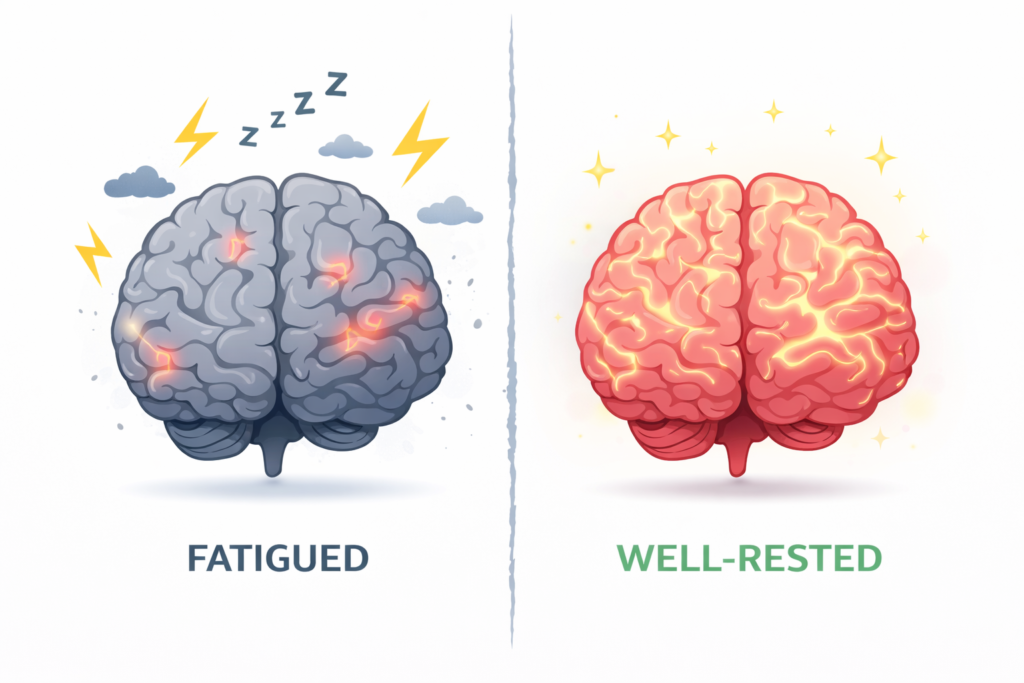
Your Brain Slows Down
Lack of sleep directly affects how your brain works.
You may notice:
- Slower thinking
- Poor concentration
- Memory problems
- More mistakes
Even simple tasks can feel harder than usual.
Your Mood Gets Worse
Sleep and emotions are closely connected.
When you don’t sleep enough, you’re more likely to feel:
- Irritable
- Stressed
- Anxious
- Easily overwhelmed
Small problems can feel much bigger.
Your Body Feels Constantly Tired
Less sleep means less recovery.
You may experience:
- Low energy
- Fatigue during the day
- Reduced motivation
This can affect both work and daily life.
Your Immune System Weakens
Sleep helps your body fight illness.
When you don’t get enough sleep:
- You get sick more easily
- Recovery takes longer
- Your body struggles to defend itself
Your Risk of Health Problems Increases
Long-term sleep deprivation is linked to:
- Heart disease
- Weight gain
- Diabetes
- High blood pressure
These risks build over time, even if you don’t notice them immediately.
Why You Might Feel “Fine” (But You’re Not)
Some people say:
“I sleep 5–6 hours and feel okay.”
But your brain adapts to sleep deprivation.
👉 You feel normal
👉 But your performance is still reduced
This means you may not notice how much it’s affecting you.
How Much Sleep Do You Actually Need?
Most adults need:
👉 7 to 9 hours per night
Some people need slightly more or less, but consistently sleeping under 6 hours is not enough for most people.
Simple Ways to Improve Your Sleep
You don’t need complicated routines.
Start with these:
- Go to bed at the same time every day
- Avoid screens 30–60 minutes before sleep
- Reduce caffeine in the evening
- Keep your room dark and quiet
- Wake up at a consistent time
Small changes can make a big difference.
A Simple Fix You Can Start Tonight
If you want immediate improvement:
- Go to bed 30 minutes earlier
- Put your phone away before sleeping
- Set a fixed wake-up time
Even this small adjustment can improve how you feel the next day.
FAQ
Is 6 hours of sleep enough?
For most people, no. Adults generally need 7–9 hours for proper recovery.
What happens if I sleep 5 hours every night?
You may experience fatigue, poor focus, and increased health risks over time.
Can I catch up on sleep later?
You can recover slightly, but it does not fully fix long-term sleep deprivation.
Why do I feel okay with little sleep?
Your brain adapts, but your performance and health are still affected.
Sleep is one of the most important factors for your health, focus, and energy.
Getting less than 6 hours regularly may seem harmless, but over time it can affect nearly every part of your life.
Start improving your sleep today—even small changes can lead to better results.