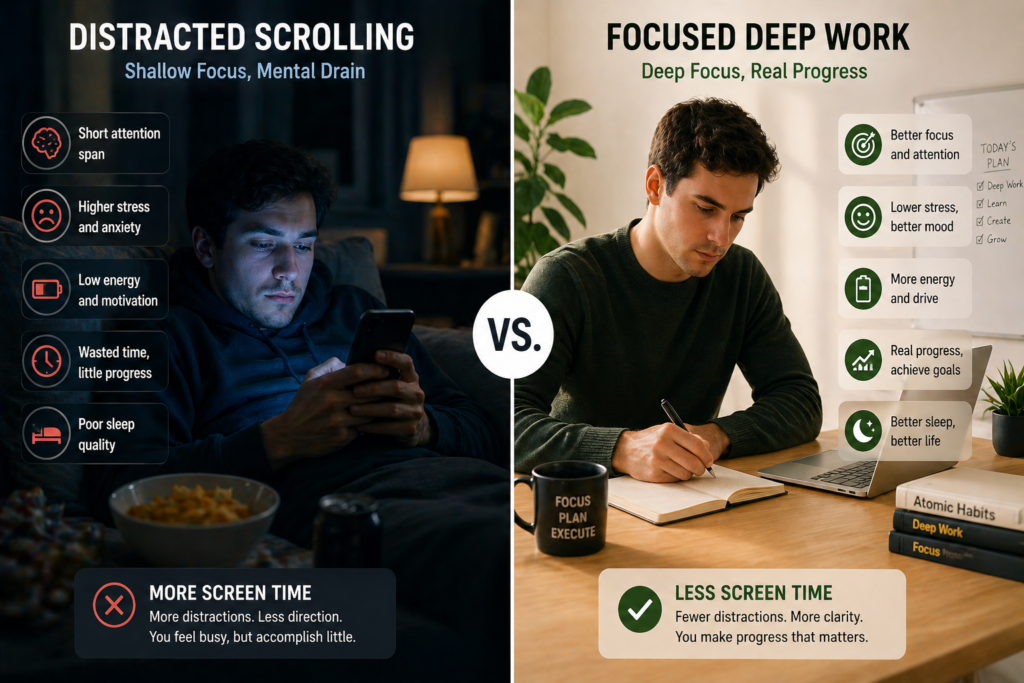
Most people spend 6–10 hours a day looking at screens—phones, laptops, and TVs. Over time, this constant stimulation affects your brain more than you realise.
Reducing screen time isn’t just about “using your phone less.” It can improve your focus, mood, sleep, and even how your brain processes information.
What Is Screen Time (and Why It Matters)?
Screen time refers to the amount of time you spend using digital devices like smartphones, computers, and televisions.
This includes:
- Social media scrolling
- Watching videos
- Working on a computer
- Gaming
Simple definition:
Screen time is the total time your brain is exposed to digital stimulation.
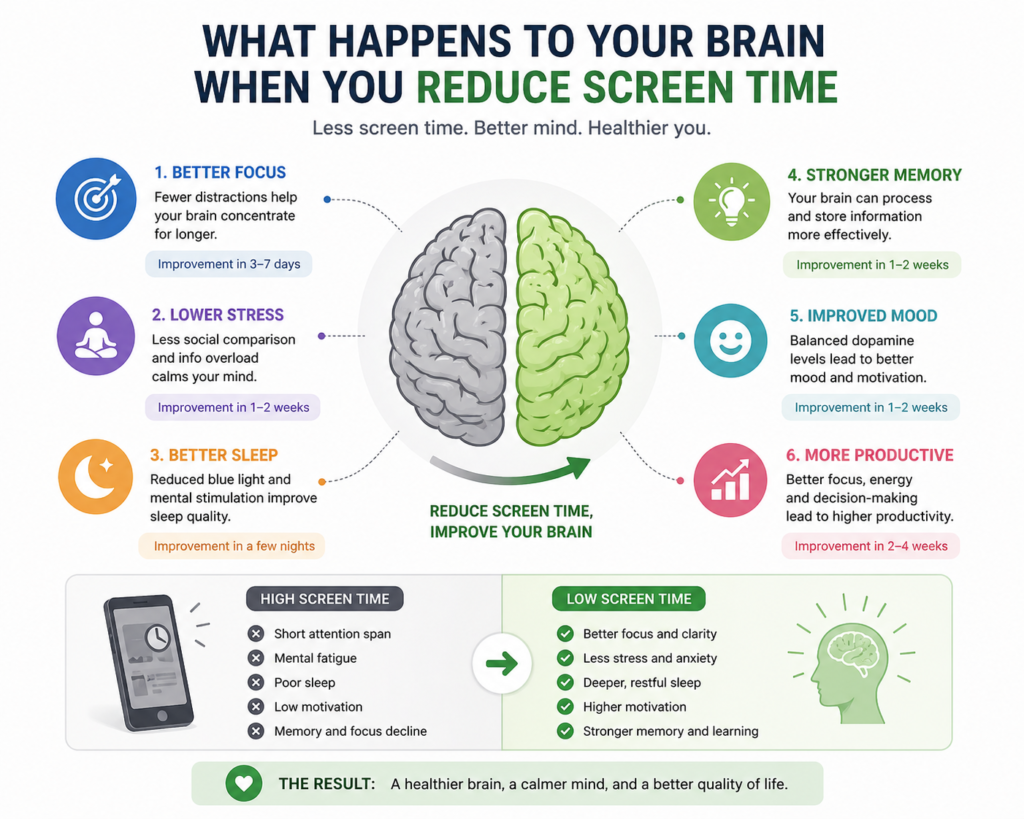
What Happens to Your Brain When You Reduce Screen Time?
Reducing screen time leads to noticeable mental improvements within days or weeks.
1. Improved Focus and Attention
Constant notifications train your brain to switch tasks quickly, reducing attention span.
When you reduce screen time:
- Your brain focuses longer
- You experience less distraction
- Deep work becomes easier
Example:
Reducing phone use by 2–3 hours daily can improve concentration within 3–7 days.
2. Lower Stress and Anxiety
Social media and constant information overload increase stress levels.
Reducing exposure helps:
- Calm your mind
- Reduce comparison and negative thinking
- Improve emotional stability
Example:
Limiting social media to 30–60 minutes daily can significantly reduce anxiety within 1–2 weeks.
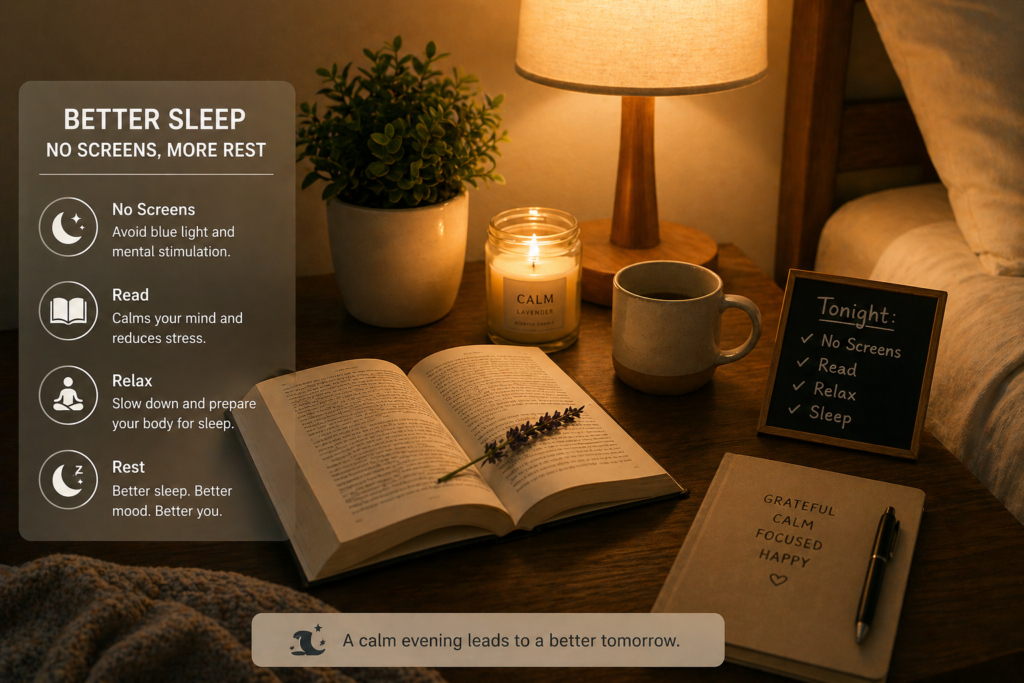
3. Better Sleep Quality
Screens emit blue light, which disrupts melatonin (the sleep hormone).
Reducing screen time:
- Helps you fall asleep faster
- Improves sleep quality
- Increases energy levels
Example:
Avoiding screens 60–90 minutes before bed can improve sleep within a few nights.
4. Stronger Memory and Thinking
Constant scrolling reduces your brain’s ability to process and retain information.
Less screen time allows:
- Better memory retention
- Deeper thinking
- Improved problem-solving
5. Increased Dopamine Balance
Digital content provides instant gratification (dopamine spikes).
Reducing screen time:
- Resets your brain’s reward system
- Makes simple activities more enjoyable
- Improves motivation
Example:
After 7–14 days of reduced screen use, activities like reading or working feel more engaging.
How to Reduce Screen Time (Step-by-Step)
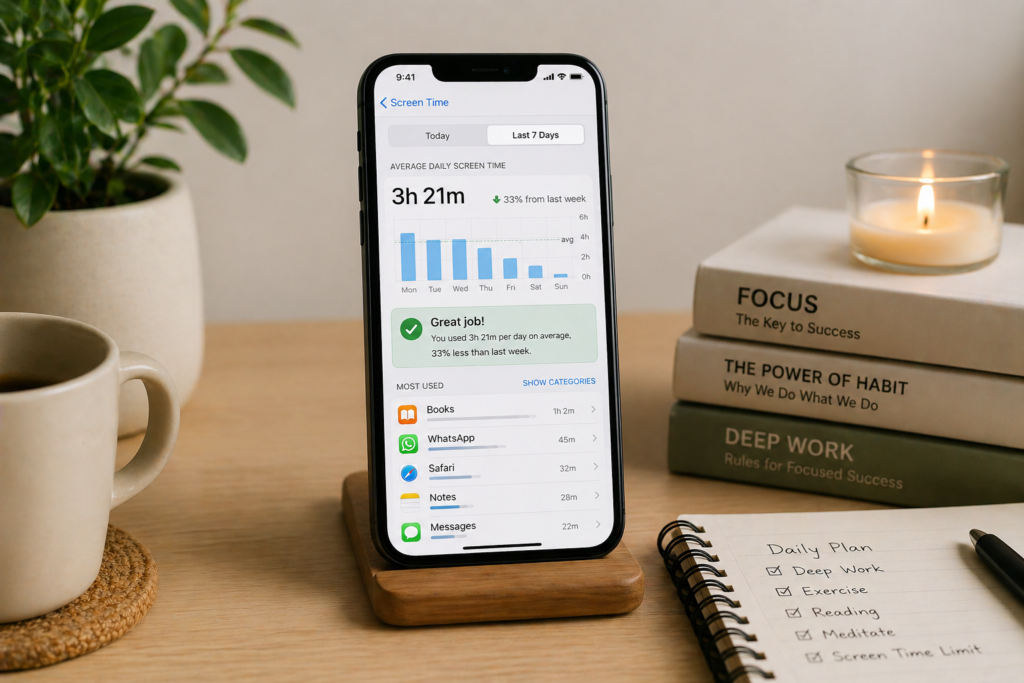
Step 1: Track Your Usage
You can’t improve what you don’t measure.
Example:
- Check screen time (5–10 hours daily for many users)
- Identify top apps consuming time
Step 2: Set Daily Limits
Start small and realistic.
Example:
- Reduce usage by 20–30%
- Cut 2 hours from a 8-hour daily average
Step 3: Remove High-Distraction Apps
Focus on apps that waste time.
Example:
- Limit social media apps
- Turn off unnecessary notifications
Step 4: Replace Screen Time with Better Habits
Don’t just remove—replace.
Examples:
- Reading
- Walking
- Journaling
Step 5: Create “No-Screen Zones”
Set boundaries in your environment.
Examples:
- No phone during meals
- No screens 1 hour before bed
Best Tools to Reduce Screen Time
🌍 Global Tools
- Forest – gamifies focus and reduces phone use
- Freedom – blocks distracting apps and websites
- RescueTime – tracks digital habits and productivity
🇺🇸 United States
- Screen Time (iOS) – built-in usage tracking and limits
- Stay Focused (Android) – restrict app usage easily
- Cold Turkey – powerful website blocker
🇬🇧 UK / Europe
- Digital Wellbeing (Android) – track and limit usage
- Offtime – block distractions and improve focus
- Flipd – lock phone during focus sessions
⚙️ Advanced Users
- Notion – plan structured daily routines
- Habitica – gamified habit tracking
- Focus To-Do – Pomodoro + task management
How Much Screen Time Should You Aim For?
There is no perfect number, but a practical target is:
- Work-related: as needed
- Entertainment: 1–3 hours daily
Example:
If you currently spend 8 hours daily:
- Reduce to 5–6 hours
- Cut 2–3 hours gradually over 2–4 weeks
Common Mistakes to Avoid
- Cutting screen time too drastically
- Replacing phone use with TV or other screens
- Not setting clear limits
- Ignoring notifications
Consistency matters more than perfection.
FAQ
How quickly can reducing screen time improve brain function?
Most people notice improved focus and mood within 3–7 days.
Is 2 hours of screen time per day healthy?
Yes, for entertainment. Work-related screen time is separate but should include breaks.
Does screen time affect mental health?
Yes. Excessive screen use is linked to stress, anxiety, and reduced focus.
What is the best way to reduce screen time?
Start by tracking usage, setting limits, and removing high-distraction apps.
Can reducing screen time improve sleep?
Yes. Avoiding screens 60–90 minutes before bed significantly improves sleep quality.
Conclusion
Reducing screen time isn’t about cutting technology—it’s about using it better.
When you reduce screen time, your brain:
- Focuses better
- Feels calmer
- Sleeps deeper
- Thinks more clearly
Start small, stay consistent, and improve gradually.
Take action today:
Reduce your screen time by just 1 hour and notice the difference within a week.