

Multitasking feels productive—but it’s one of the biggest hidden productivity killers.
Switching between tasks may seem efficient, but research shows it actually reduces focus, increases mistakes, and wastes time. The solution isn’t doing more at once—it’s doing one thing better.
What Is Multitasking?
Multitasking is the act of handling multiple tasks at the same time or rapidly switching between them.
Examples:
- Replying to messages while working
- Watching videos while studying
- Switching between emails and reports
Simple definition:
Multitasking is dividing your attention across tasks instead of focusing on one.
Why Multitasking Hurts Productivity
Your brain is not designed to handle multiple complex tasks at once.
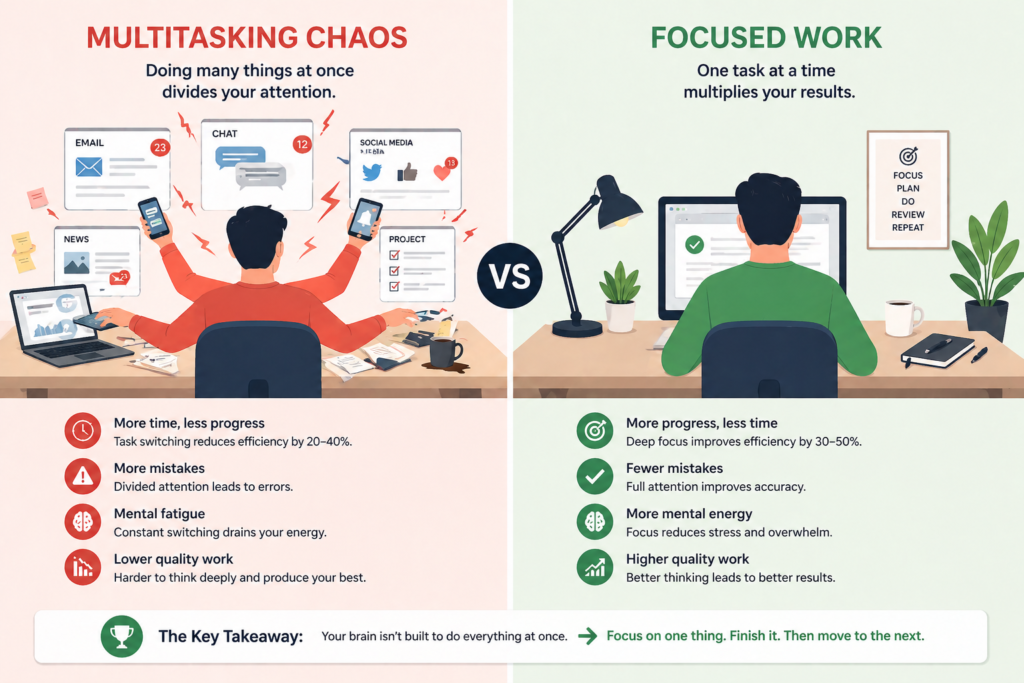
1. Task Switching Reduces Efficiency
Each time you switch tasks, your brain needs time to refocus.
Impact:
- Lose 20–40% productivity
- Increased mental fatigue
Scenario:
Switching between emails and a report every 5 minutes can double the time needed to finish both.
2. More Mistakes and Lower Quality
Divided attention leads to errors.
Example:
Typing messages while analysing data increases the risk of mistakes.
3. Reduced Memory and Learning
Multitasking limits how well your brain processes information.
Scenario:
Studying while scrolling social media reduces retention significantly.
4. Increased Stress and Burnout
Constant switching overloads your brain.
Result:
- Higher stress levels
- Faster mental exhaustion
The Science Behind Focus
Your brain relies on something called “deep focus” to perform well.
When you focus on one task:
- Brain efficiency improves
- Information processing becomes faster
- Mental clarity increases
Key insight:
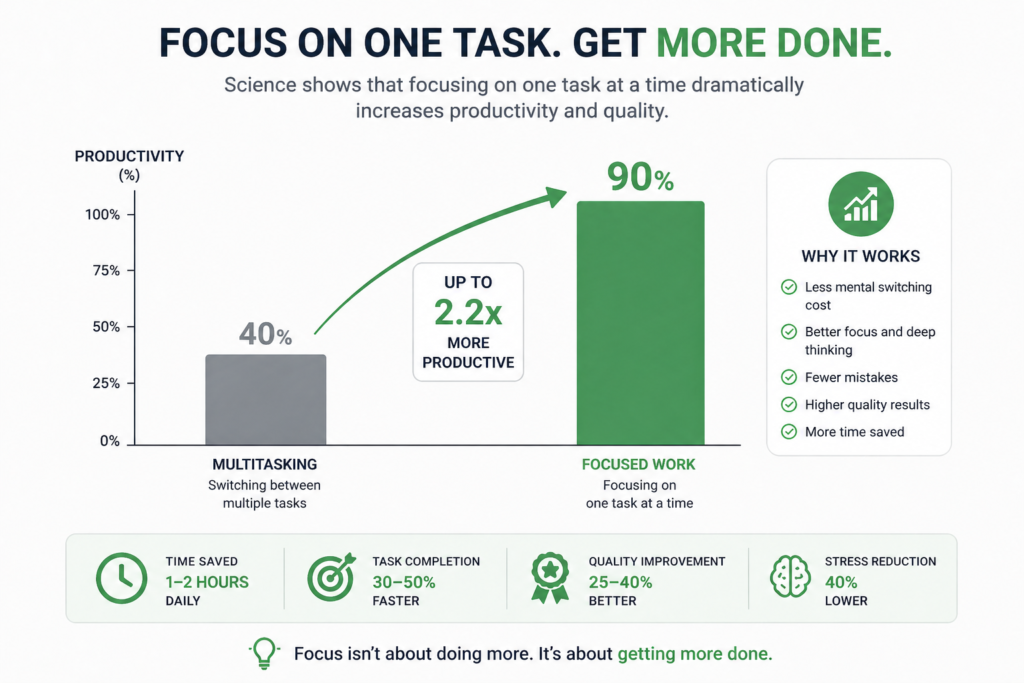
Doing one task at a time can improve performance by 30–50%.
What to Do Instead of Multitasking
1. Use Single-Tasking (Deep Work)
Focus on one task for a set period.
Example:
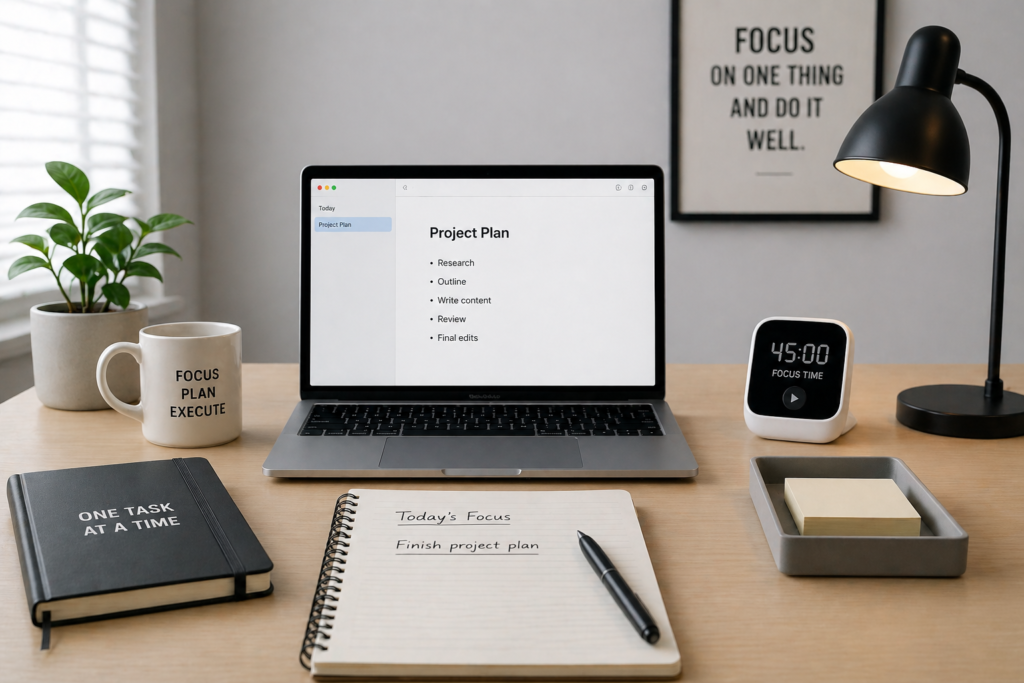
- Work on one task for 45–60 minutes
- No interruptions
2. Apply the Time Blocking Method
Schedule your day into focused blocks.
Example:
- 9:00–10:00 → Deep work
- 10:00–10:30 → Emails
This reduces constant switching.
3. Use the Pomodoro Technique
Work in short, focused sessions.
How it works:
- 25 minutes work
- 5 minutes break
Repeat 4 times, then take a longer break.
4. Eliminate Distractions
Remove unnecessary interruptions.
Examples:
- Turn off notifications
- Use focus apps
5. Batch Similar Tasks Together
Group similar work to avoid switching.
Example:
- Answer all emails at once
- Complete admin tasks in one block
Real Examples of Productivity Improvement
Example 1: Work Efficiency
Switching from multitasking to focused work:
- Saves 1–2 hours daily
- Improves output quality
Example 2: Study Performance
Single-task studying:
- Improves retention by 20–30%
- Reduces revision time
Example 3: Reduced Stress
Limiting task switching:
- Lowers mental fatigue
- Improves work satisfaction
Best Tools to Improve Focus
🌍 Global
- Forest – stay focused visually
- RescueTime – track time usage
- Notion – organise tasks
🇺🇸 United States
- Freedom – block websites/apps
- Todoist – manage tasks clearly
🇬🇧 UK / Europe
- Brain.fm – improve concentration
- TickTick – plan tasks efficiently
⚙️ Advanced Users
- Cold Turkey – block distractions deeply
- Toggl Track – measure productivity
Common Mistakes to Avoid
- Keeping notifications on
- Switching tasks too frequently
- Working without clear priorities
- Overloading your schedule
Better approach:
Focus on fewer tasks and complete them properly.
FAQ
Is multitasking ever effective?
Only for simple tasks (e.g., listening to music while walking). Complex tasks require full focus.
Why does multitasking feel productive?
Because you’re busy—but not necessarily efficient.
How long should I focus on one task?
Typically 25–60 minutes depending on your energy levels.
Can multitasking damage productivity long-term?
Yes. It trains your brain to lose focus more easily.
What is the best alternative to multitasking?
Single-tasking with structured focus methods like time blocking.
Conclusion
Multitasking may feel efficient, but it actually reduces productivity, increases stress, and lowers work quality.
The solution is simple: focus on one task at a time, eliminate distractions, and structure your workday. Small changes can lead to major improvements in performance and mental clarity.
Start today—pick one task, focus fully, and finish it.