

Understanding financial statements might sound complicated—but it’s one of the most valuable skills you can learn.
Whether you want to invest, start a business, or simply understand how companies make money, learning to read financial statements can help you make smarter decisions and avoid costly mistakes.
What Are Financial Statements?
Financial statements are reports that show a company’s financial health.
They answer key questions:
- Is the company making money?
- Does it have debt?
- Is it financially stable?
The 3 Main Financial Statements
- Income Statement → shows profit and loss
- Balance Sheet → shows assets and liabilities
- Cash Flow Statement → shows cash movement
Simple definition:
Financial statements are documents that reveal how a company earns, spends, and manages money.
Why Learning to Read Financial Statements Matters
Understanding financial statements helps you:
- Make better investment decisions
- Avoid risky companies
- Understand business performance
- Build financial literacy
Scenario:
Two companies both earn $1M revenue—but one has high debt and low cash.
Without reading financial statements, you wouldn’t spot the risk.
How to Read Financial Statements (Step-by-Step)
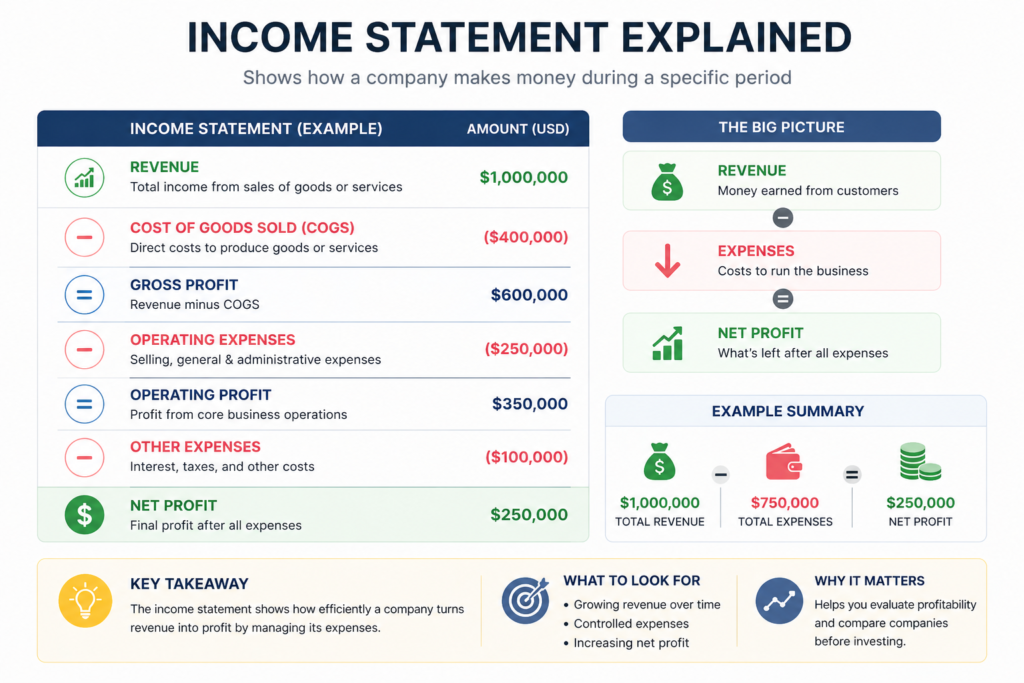
Step 1: Start with the Income Statement
The income statement shows how much money a company makes.
Key Components
- Revenue (total income)
- Expenses (costs)
- Net profit (final earnings)
Example:
- Revenue = $1,000,000
- Expenses = $800,000
- Profit = $200,000
👉 A higher profit margin = healthier business.
Step 2: Understand the Balance Sheet
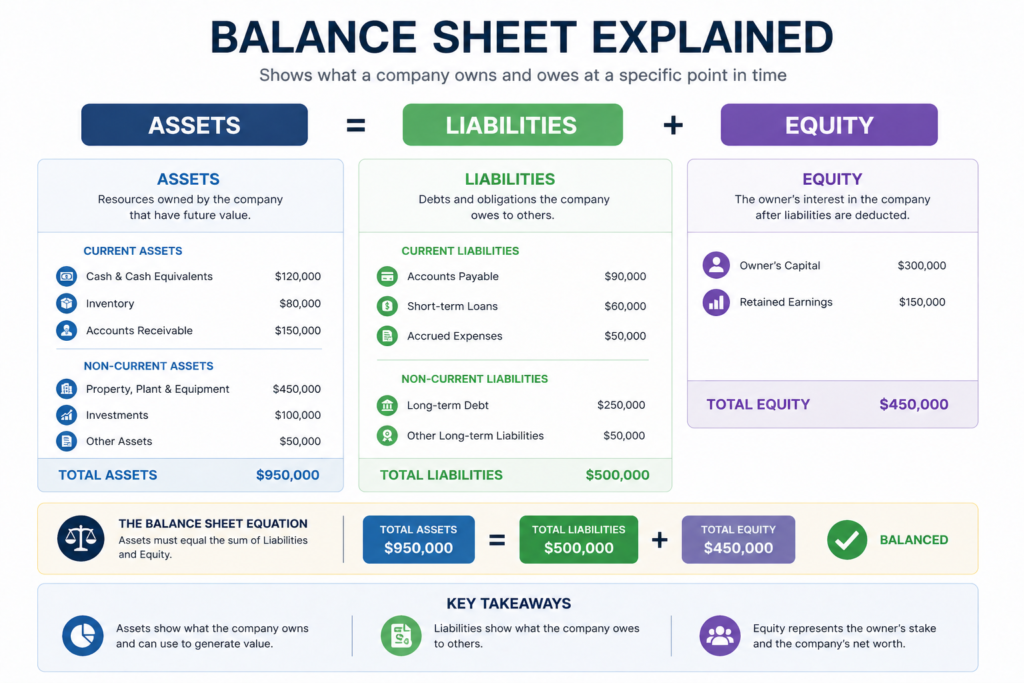
The balance sheet shows what a company owns and owes.
Key Formula
Assets = Liabilities + Equity
What to Look For
- Assets → cash, equipment, inventory
- Liabilities → debts, loans
- Equity → owner’s value
Scenario:
A company with $500,000 assets and $450,000 debt is riskier than one with $200,000 debt.
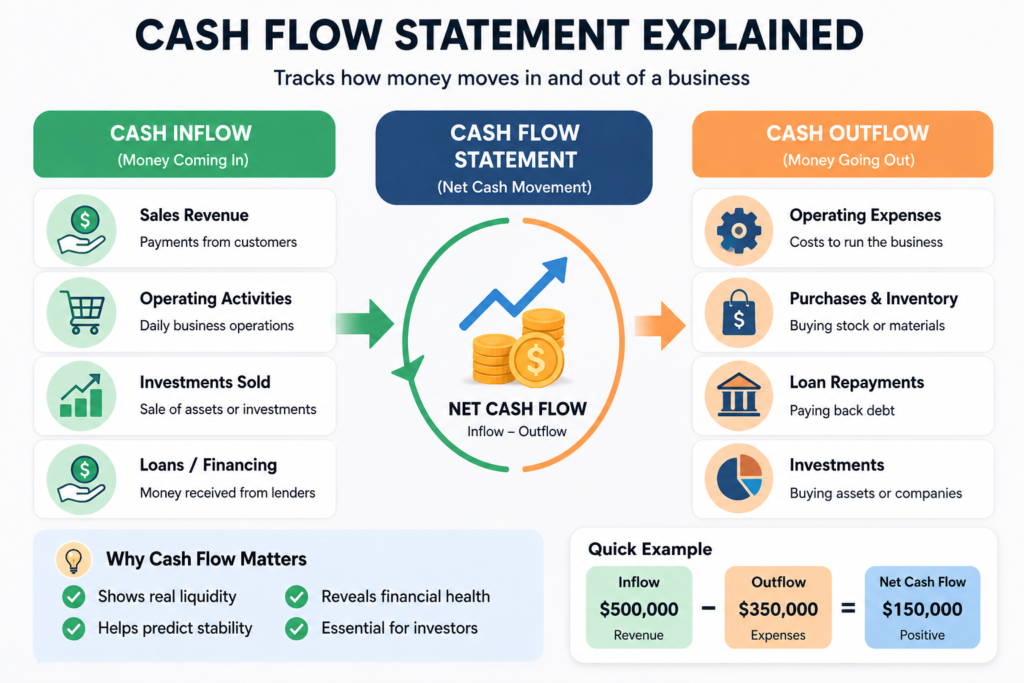
Step 3: Analyse the Cash Flow Statement
Cash flow shows how money actually moves.
Types of Cash Flow
- Operating → daily business activities
- Investing → buying assets
- Financing → loans or investments
Example:
A company may show profit but have negative cash flow, meaning it could struggle to pay bills.
Real Example: Simple Company Breakdown
Let’s imagine a company:
- Revenue: $500,000
- Profit: $80,000
- Cash: $20,000
- Debt: $300,000
What This Means:
- Profitable but low cash
- High debt → potential risk
- Needs careful evaluation
👉 This shows why all three statements matter together.
Key Financial Ratios Beginners Should Know
1. Profit Margin
Profit ÷ Revenue
Example:
$100,000 ÷ $500,000 = 20%
Higher = better efficiency
2. Debt-to-Equity Ratio
Debt ÷ Equity
Scenario:
High ratio = higher risk
3. Current Ratio
Current Assets ÷ Current Liabilities
Measures short-term financial health
Best Tools to Read Financial Statements
🌍 Global
- Yahoo Finance – easy financial summaries
- Investing.com – global financial data
- Microsoft Excel – analyse financial data
🇺🇸 United States
- SEC EDGAR – official company reports
- Robinhood – simple financial overview
🇬🇧 UK / Europe
- Companies House – official filings
- Freetrade – simple stock insights
⚙️ Advanced Users
- QuickBooks – financial tracking
- Morningstar – deep analysis
Common Mistakes Beginners Make
- Only looking at profit
- Ignoring debt levels
- Skipping cash flow analysis
- Not comparing multiple companies
Better approach:
Always review all three statements together.
FAQ
What is the easiest financial statement to understand?
The income statement is the easiest because it shows profit and loss clearly.
Do I need accounting knowledge to read financial statements?
No. Basic understanding is enough to get started.
What is the most important financial statement?
All three are important, but cash flow is critical for real financial health.
How long does it take to learn financial statements?
You can learn the basics in a few hours and improve over time.
Can financial statements help with investing?
Yes. They help you evaluate companies and avoid bad investments.
Conclusion
Reading financial statements is a powerful skill that gives you insight into how businesses actually work.
By understanding income, assets, and cash flow, you can make smarter financial decisions and avoid unnecessary risks.
Start simple, practise regularly, and you’ll build confidence quickly.