Saving money every month does not mean cutting out everything you enjoy. In most cases, the smartest savings come from removing waste, improving habits, and making better use of the money you already earn.
The goal is not to live on the bare minimum. The goal is to spend with intention, reduce unnecessary costs, and keep more money for the things that actually matter.
This guide shares 10 proven ways to save money every month without sacrifice. Each tip is beginner-friendly, practical, and designed to help you build better saving habits without feeling restricted.
What Does It Mean to Save Money Without Sacrifice?
Saving money without sacrifice means reducing wasteful or low-value spending while keeping the things that genuinely improve your life.
For example, cancelling a forgotten $14.99 subscription is not the same as giving up your favourite hobby. Switching to a cheaper phone plan that offers the same data is not a lifestyle downgrade. It is simply smarter money management.
A realistic target is to save 5–15% of your monthly income or $100–$500 per month, depending on your earnings, expenses, and current habits.
Why Small Monthly Savings Matter
Small savings become powerful because they repeat.
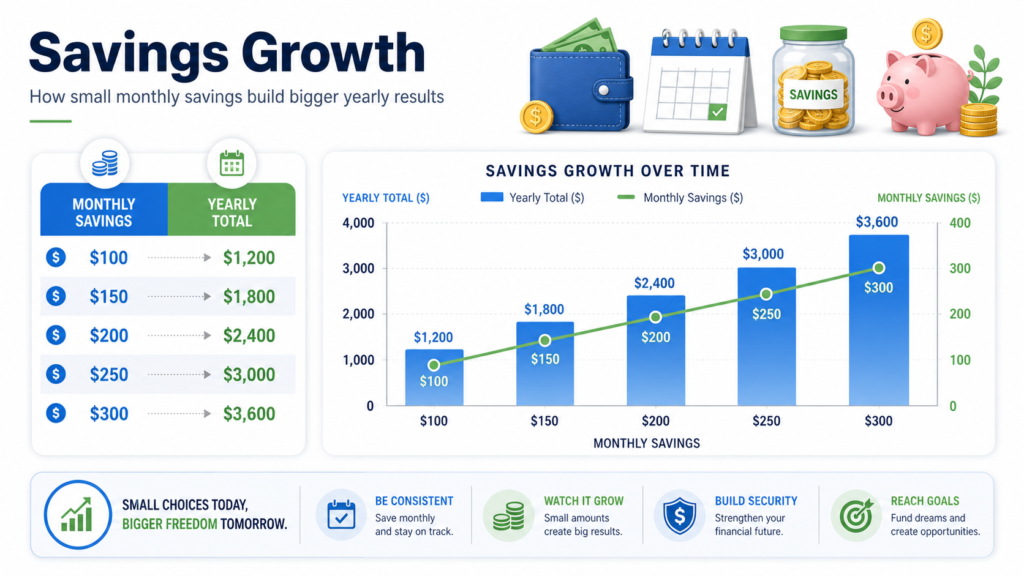
Saving $150 per month gives you $1,800 per year. Saving $300 per month gives you $3,600 per year. That money can build an emergency fund, reduce debt, support investing, or cover future expenses without using credit cards.
The key is consistency. You do not need one dramatic lifestyle change. You need several smart adjustments that quietly improve your finances every month.
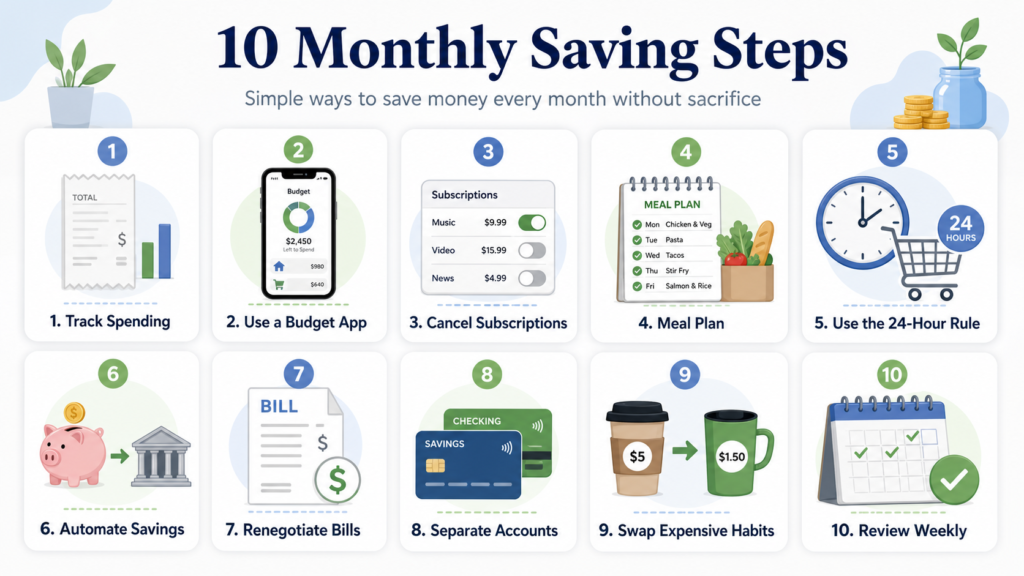
1. Track Your Spending for 7 Days
You cannot fix what you cannot see. The first step is to track your spending for one week.
Write down every purchase, including coffee, snacks, delivery fees, subscriptions, transport, and online shopping. You can use a notebook, Google Sheets, Apple Numbers, or a budgeting app.
After 7 days, group your spending into simple categories:
- Food and groceries
- Transport
- Subscriptions
- Bills
- Shopping
- Entertainment
- Savings and debt payments
A simple scenario: if you discover you spend $12 per day on unplanned snacks, that is around $360 per month. Cutting it by half could save $180 monthly without removing it completely.
2. Use a Budgeting App That Fits Your Style
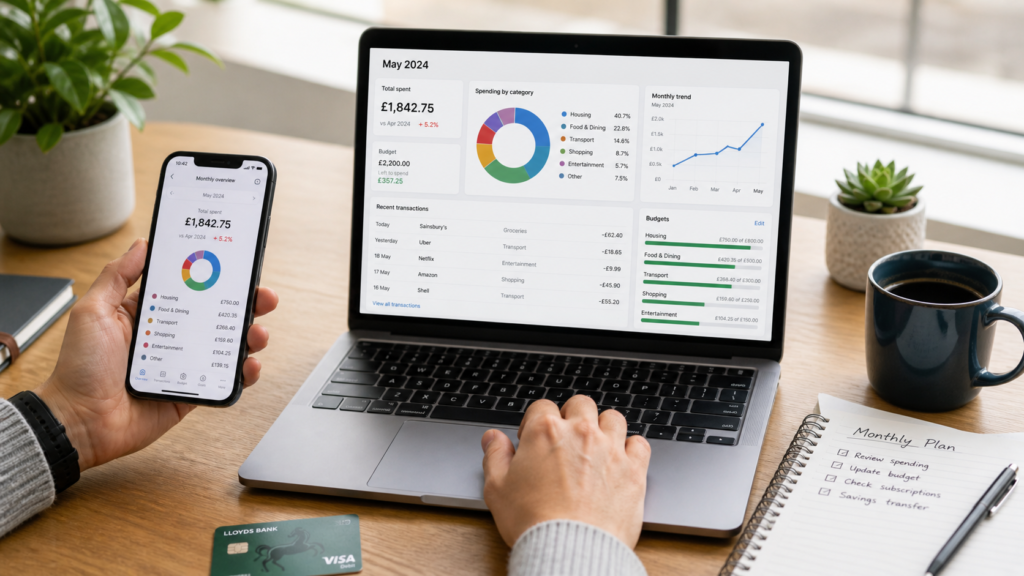
A budgeting app helps you see where your money goes, set limits, and build better saving habits.
YNAB, for example, offers features such as bank imports, goal tracking, and spending visibility across devices. Rocket Money helps users track subscriptions, budgets, and recurring bills. MoneyHelper also provides a free budget planner that breaks down income and spending to show what is left over. (ynab.com)
Recommended Budgeting Tools by Region
Global
- YNAB — strong for intentional monthly budgeting
- Google Sheets — flexible free manual budget tracking
- Wallet by BudgetBakers — useful multi-currency expense tracking
United States
- Rocket Money — tracks subscriptions and recurring bills
- Quicken Simplifi — clear spending and cash-flow tracking
- Monarch Money — useful dashboard for household finances
United Kingdom / Europe
- MoneyHelper Budget Planner — free official budgeting tool
- Emma — tracks subscriptions and spending categories
- Snoop — highlights bills, spending, and saving ideas
Advanced users
- Tiller Money — spreadsheet-based automated tracking
- Actual Budget — open-source style budgeting option
- Notion templates — custom dashboards for manual tracking
Choose one tool only. Using three apps at once usually creates confusion rather than clarity.
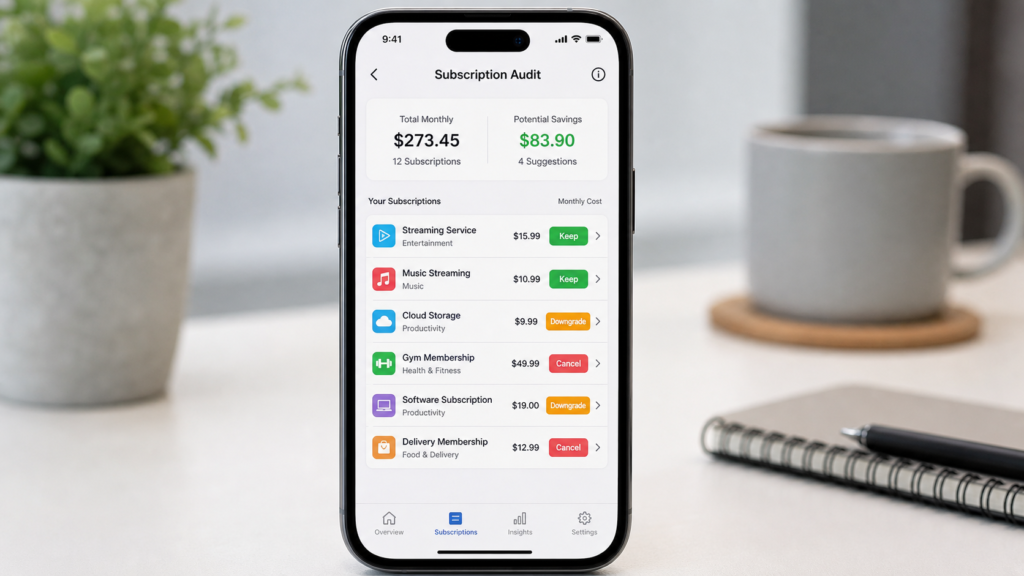
3. Cancel or Downgrade Unused Subscriptions
Subscriptions are one of the easiest places to save money because they often continue unnoticed.
Check your bank statement for recurring payments. Look for streaming services, cloud storage, apps, software trials, gym memberships, gaming subscriptions, and delivery memberships.
Use this simple rule:
- Keep it if you use it weekly
- Downgrade it if you use it monthly
- Cancel it if you forgot it existed
If you cancel three unused subscriptions costing $9.99–$19.99 each, you could save around $30–$60 per month or $360–$720 per year.
Rocket Money is especially useful for identifying recurring subscriptions, while Emma and Snoop can help highlight regular spending patterns in the UK and Europe. Rocket Money states that its subscription feature identifies recurring payments and helps users cancel unwanted subscriptions. (rocketmoney.com)
4. Build a “Default Grocery List”
Food spending is not just about prices. It is about decisions.
A default grocery list helps you avoid random purchases and expensive last-minute meals. Create a list of 15–25 items you buy regularly, such as rice, pasta, eggs, chicken, vegetables, fruit, yoghurt, oats, beans, sauces, and frozen items.
Then plan 3–5 repeatable meals each week.
Example:
- Breakfast: oats, yoghurt, eggs
- Lunch: rice bowls, sandwiches, salads
- Dinner: pasta, stir-fry, soup, chicken wraps
If meal planning reduces takeaway spending by 2 meals per week at $15–$25 each, you could save $120–$200 per month while still eating well.
5. Use the 24-Hour Rule for Non-Essential Purchases
Impulse buying often happens because the purchase feels urgent in the moment.
The 24-hour rule is simple: when you want to buy something non-essential, wait one day before buying it. For items over $100, wait 7 days.
This works especially well for:
- Clothes
- Tech accessories
- Online deals
- Home decor
- Apps and digital products
- Fitness equipment
Example: you see headphones on sale for $129. Instead of buying immediately, add them to a wishlist. If you still want them after 7 days and they fit your budget, buy them. If not, you just saved $129.
6. Automate Savings on Payday
Saving becomes easier when it happens before you spend.
Set up an automatic transfer on payday to move money into a separate savings account. Start with 5–10% of your income or $50–$300 per month, depending on your budget.
For example, if you earn $3,000 per month, saving 10% means transferring $300 automatically. If that feels too high, start with $100 and increase it by $25 every month.
This method works because you do not rely on motivation. The system does the work for you.
7. Renegotiate Bills Once Every 6 Months
Many people overpay for bills because they never check alternatives.
Review these every 6 months:
- Mobile phone plan
- Internet package
- Insurance
- Energy provider
- Banking fees
- Software plans
- Credit card interest rates
A realistic saving from renegotiating or switching providers is often 5–20% per bill. If your phone, internet, and insurance cost $250 per month, even a 10% reduction saves $25 monthly or $300 yearly.
Use comparison tools where available, but always check fees, contract length, cancellation terms, and service quality before switching.
8. Create Separate Accounts for Spending and Bills
One common budgeting problem is mixing bill money with daily spending money.
A simple account structure can fix this:
- Main account: salary and bill payments
- Spending account: food, transport, shopping, fun
- Savings account: emergency fund and goals
For example, if your monthly spending allowance is $800, transfer $200 per week into your spending account. Once it is gone, you pause non-essential spending until the next week.
This makes budgeting easier because you can see exactly what is available without calculating every bill in your head.
9. Replace Expensive Habits With Lower-Cost Versions
Saving money does not always require quitting what you enjoy. Often, you only need a cheaper version.
Examples:
- Replace 5 takeaway coffees with 2 per week
- Use home workouts 3 days and gym 2 days
- Cook restaurant-style meals at home twice weekly
- Use library apps for books and audiobooks
- Host movie nights instead of cinema trips every week
If you reduce takeaway coffee from $5 daily to $5 twice weekly, spending drops from around $150 monthly to $40 monthly. That saves around $110 per month without removing coffee completely.
The goal is not zero enjoyment. The goal is better value.
10. Review Your Money Every Sunday
A weekly money review keeps your budget alive.
Spend 15–20 minutes every Sunday checking:
- What you spent this week
- Which category went over budget
- What bills are coming next
- How much you saved
- What you can adjust next week
Use a simple checklist in Google Sheets, Notion, YNAB, or your banking app.
For example, if you notice you spent $90 on delivery food this week, plan two easy meals before the next busy workday. That one adjustment could save $40–$80 the following week.
Best Tools and Platforms for Saving Money
Use tools as support, not as a replacement for good habits.
Budgeting tools work best when you check them regularly and act on what they show. MoneyHelper notes that accurate numbers from bank statements, bills, and banking apps help create a clearer picture of spending. (MaPS)
Good tool placements for monetisation:
- Budget app comparison table after Tip #2
- Subscription tracker recommendation after Tip #3
- Savings account or banking app CTA after Tip #6
- Spreadsheet template download after Tip #10
Subtle CTA example:
Want an easier system? Try a budgeting app or simple spreadsheet that tracks income, bills, subscriptions, and savings goals in one place.
FAQ
How can I save money every month on a low income?
Start with small repeatable savings. Track spending for 7 days, cancel unused subscriptions, reduce impulse purchases, and automate $25–$100 monthly if possible. The goal is consistency, not perfection.
What is the best way to save money without feeling restricted?
Focus on cutting waste instead of cutting joy. Keep spending that matters to you, but reduce low-value costs such as unused subscriptions, delivery fees, bank charges, and impulse purchases.
How much should I save each month?
A good target is 5–15% of your income. If you earn $3,000 monthly, that means $150–$450 per month. Start lower if needed and increase gradually.
Are budgeting apps worth it?
Budgeting apps are worth it if they help you take action. They can track spending, show patterns, and highlight subscriptions. However, a free spreadsheet can also work well if you prefer manual control.
What is the easiest monthly saving habit?
Automating savings on payday is often the easiest. Transfer $50–$300 into savings before spending begins. This removes the need to decide every week.
Conclusion
Saving money every month without sacrifice is about smarter choices, not extreme restriction.
Start by tracking your spending, cancelling wasteful subscriptions, creating a simple grocery routine, and automating savings on payday. Then review your money weekly so small problems do not become expensive habits.
Even saving $100–$300 per month can create meaningful progress over a year. The best system is the one you can repeat without feeling miserable.
CTA: Pick two tips from this list today, apply them this week, and aim to save your first $100–$250 within the next 30 days.