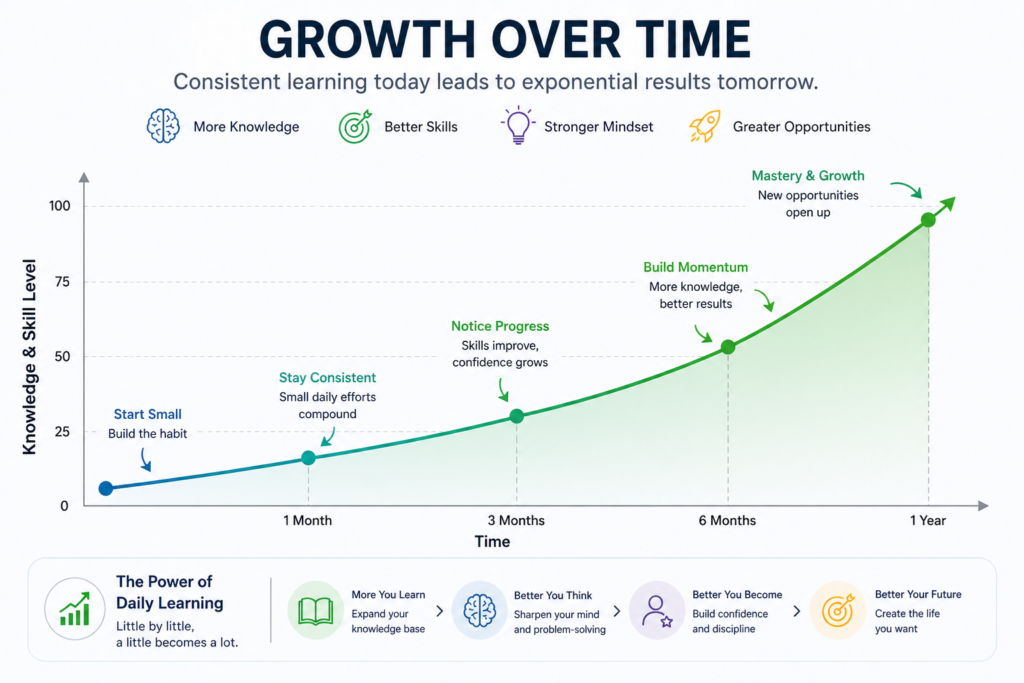
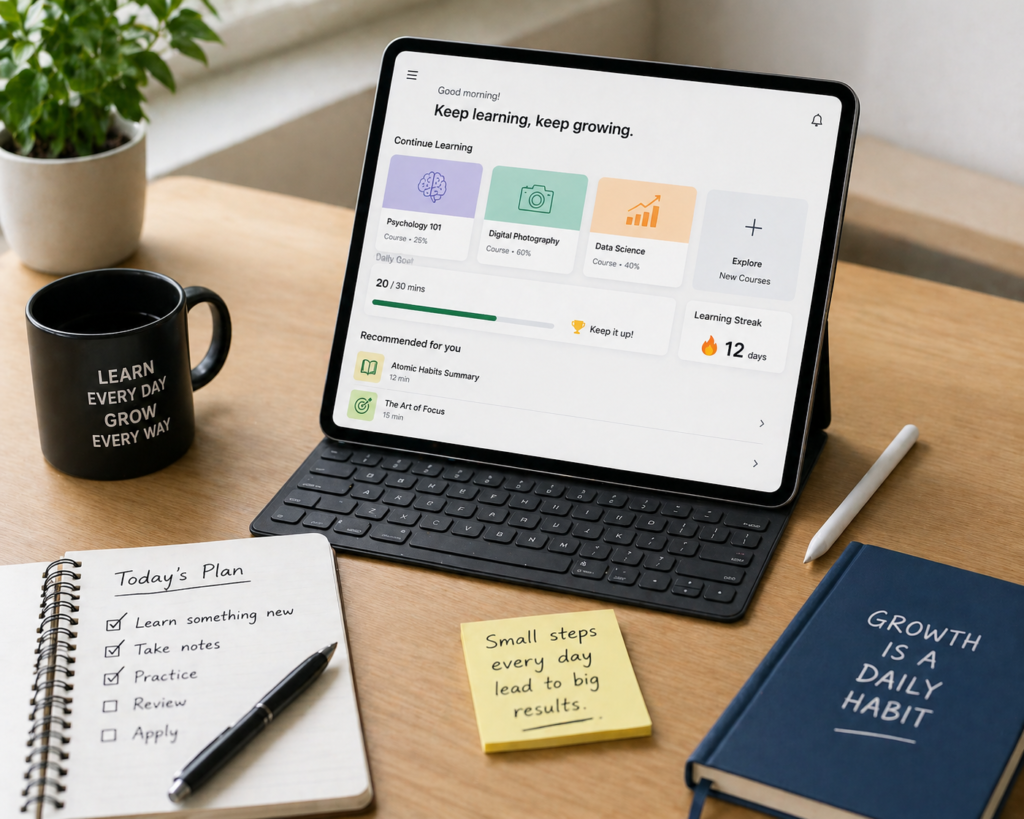
Your brain changes every time you learn something new. In fact, learning daily can physically rewire your brain, improve memory, and even increase your ability to focus.
The best part? You don’t need hours of study. Just 10–30 minutes a day can trigger powerful brain changes that build over time.
What Happens to Your Brain When You Learn Something New Daily?
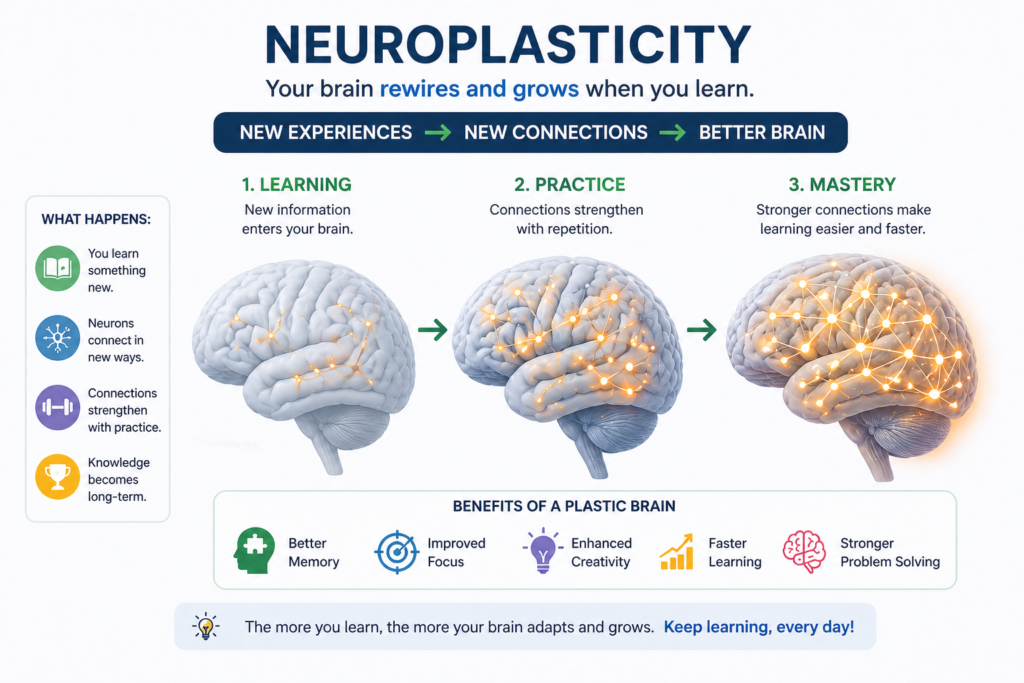
Learning something new daily strengthens your brain through a process called Neuroplasticity.
This means your brain:
- Forms new neural connections
- Strengthens existing pathways
- Improves communication between neurons
Simple explanation:
Think of your brain like a muscle. The more you use it, the stronger and more efficient it becomes.
What Is Neuroplasticity?
Neuroplasticity is your brain’s ability to change, adapt, and grow based on experience.
Why It Matters
- Helps you learn faster over time
- Improves memory retention
- Increases problem-solving ability
Example:
If you learn a new language for 15 minutes daily, your brain gradually builds stronger connections related to vocabulary, grammar, and recall.
Why Learning Daily Is More Powerful Than Occasional Learning
Consistency beats intensity when it comes to brain development.
Daily Learning Benefits
- Strengthens memory by 20–40% over time
- Improves focus and attention span
- Reduces mental fatigue
- Builds long-term knowledge
Scenario:
Studying for 2 hours once a week vs 20 minutes daily:
The daily learner retains more information due to repetition and reinforcement.
How Learning Daily Changes Your Brain (Step-by-Step)
1. Builds New Neural Pathways
Each time you learn, your brain creates new connections.
Example:
Learning how to use Duolingo builds language-related pathways over time.
2. Strengthens Memory Systems
Repetition helps transfer information from short-term to long-term memory.
Scenario:
Practising a skill daily for 10 minutes can increase retention by 30–50% compared to irregular practice.
3. Improves Focus and Attention
Learning requires concentration, which trains your brain to focus better.
Example:
Using Lumosity daily improves cognitive performance and attention span.
4. Boosts Problem-Solving Skills
New knowledge expands your thinking ability.
Example:
Learning basic coding on SoloLearn helps you think logically and solve problems faster.
5. Increases Confidence and Motivation
Progress builds confidence.
Scenario:
Learning a new skill daily for 30 days creates visible improvement, which motivates you to continue.
Real Examples of Daily Learning in Action
Example 1: Learning a Language
Using Duolingo for 15 minutes daily:
- 1 week → basic words
- 1 month → simple conversations
- 3 months → noticeable fluency
Example 2: Learning a Skill Online
Platforms like Coursera:
- 20 minutes daily = 10+ hours/month
- Enough to complete beginner-level courses
Example 3: Reading Daily
Reading 10 pages per day:
- ~300 pages/month
- 10–12 books per year
This dramatically improves knowledge and vocabulary.
Best Tools to Help You Learn Daily
🌍 Global
- Duolingo – learn languages quickly
- Coursera – structured courses from universities
- Blinkist – learn key ideas in minutes
🇺🇸 United States
- Khan Academy – maths, science, and more
- MasterClass – learn from professionals
🇬🇧 UK / Europe
- BBC Bitesize – simple structured lessons
- FutureLearn – UK-based courses
⚙️ Advanced Users
- Notion – track learning progress
- Anki – spaced repetition learning
How to Build a Daily Learning Habit
Step-by-Step System
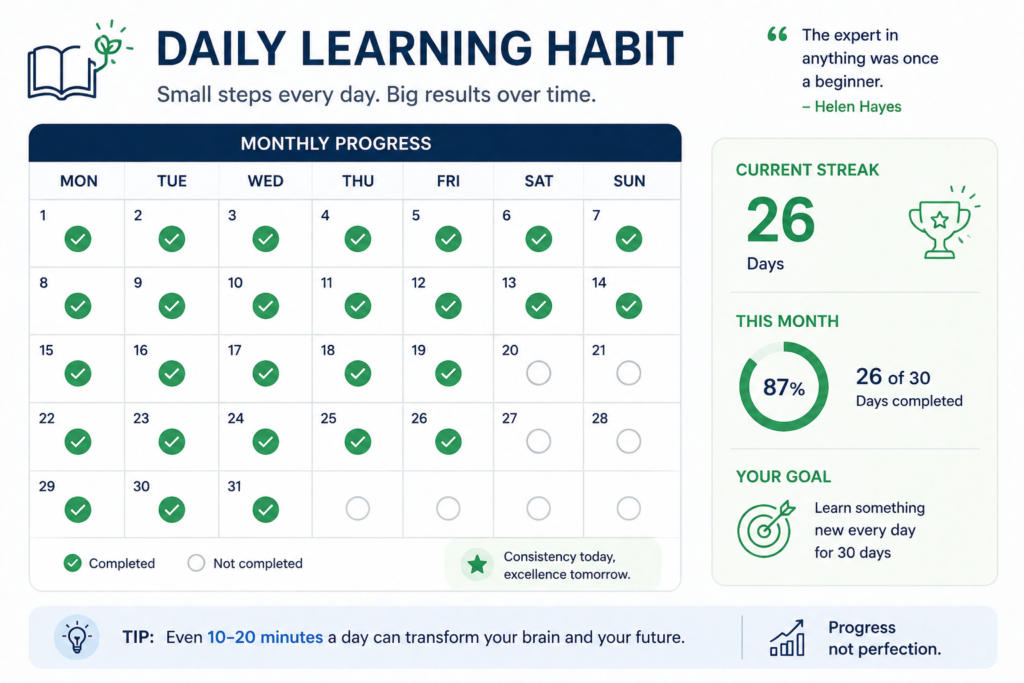
- Start small (10–15 minutes daily)
- Choose one topic at a time
- Use apps or structured platforms
- Track your progress
- Stay consistent
Example Plan:
- Day 1–7 → 10 minutes daily
- Week 2 → 15 minutes daily
- Month 1 → 20+ minutes daily
Consistency is more important than duration.
Common Mistakes to Avoid
- Trying to learn too much at once
- Skipping days frequently
- Not applying what you learn
- Switching topics too often
Better approach:
Focus on one skill for 30–60 days before switching.
FAQ
How long should I learn each day?
10–30 minutes is enough to see brain improvement over time.
Can learning daily really change your brain?
Yes. Due to Neuroplasticity, your brain physically adapts with consistent learning.
What is the best thing to learn daily?
Anything useful to your goals—languages, skills, or knowledge-based topics.
How long before I see results?
Most people notice improvements in focus and memory within 2–4 weeks.
Is it better to learn daily or in long sessions?
Daily learning is more effective due to repetition and memory reinforcement.
Conclusion
Learning something new daily is one of the most powerful habits you can build. It strengthens your brain, improves memory, and increases your ability to think and solve problems.
Start with just 10 minutes today, stay consistent, and watch your brain transform over time.