
You know what you need to do—but you still don’t do it.
Instead, you scroll, delay, or convince yourself you’ll start later. This isn’t laziness. It’s how your brain is wired.
Understanding why we procrastinate is the first step to fixing it. Once you know what’s happening inside your brain, you can use simple strategies to take back control and get things done faster.
Why Your Brain Procrastinates
Procrastination is not a time problem. It’s a brain and emotion problem.
Your brain prefers comfort over effort
Your brain is designed to avoid discomfort.
Tasks that feel difficult, boring, or stressful trigger resistance. So your brain looks for something easier—like checking your phone or doing low-effort tasks.
You seek instant rewards
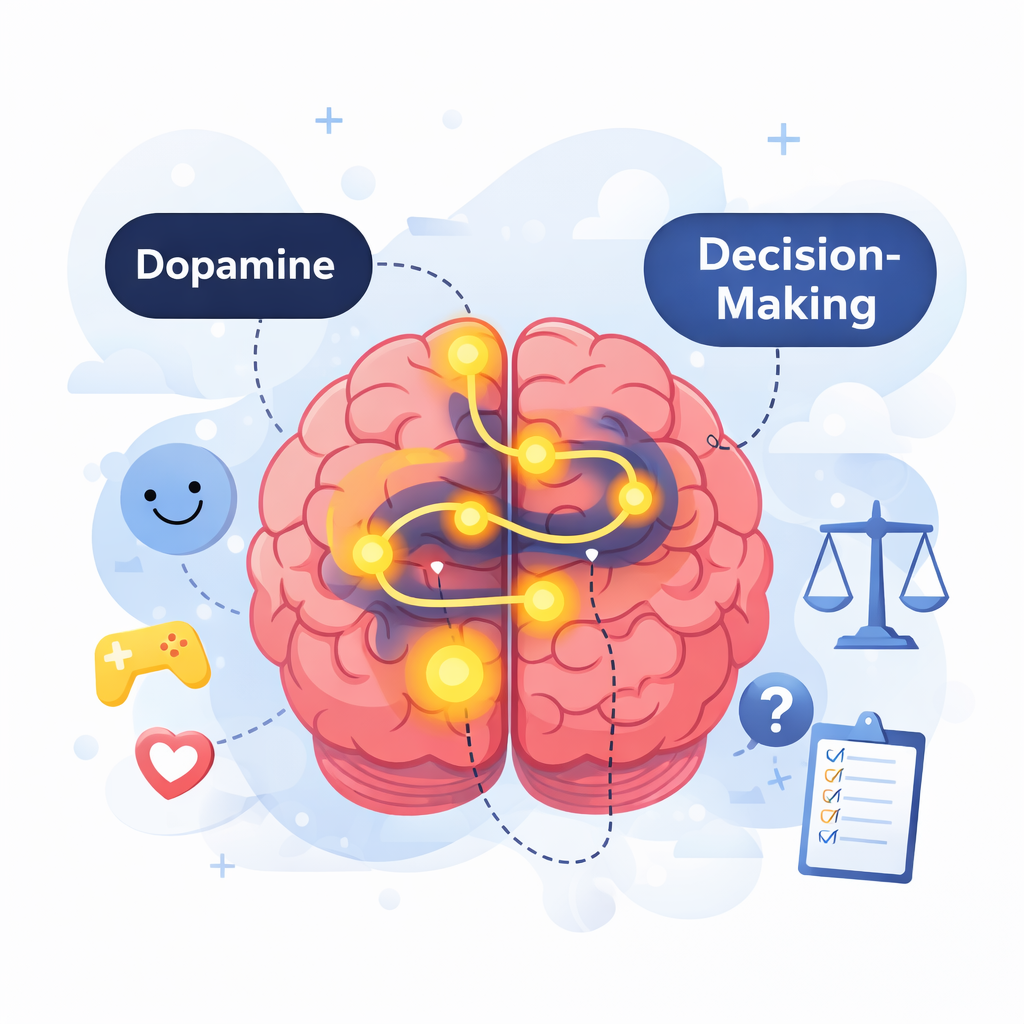
The brain is driven by dopamine.
Quick activities like social media or videos give instant rewards, while important tasks often have delayed results. This makes it harder to start meaningful work.
You feel overwhelmed
When a task feels too big or unclear, your brain avoids it completely.
This creates a loop:
- You delay the task
- The task becomes more stressful
- You avoid it even more
Fear plays a role
Procrastination is often linked to:
- Fear of failure
- Fear of making mistakes
- Fear of not doing something perfectly
Avoiding the task temporarily reduces that fear.
How to Fix Procrastination Fast
Now that you understand the cause, here’s how to fix it using simple, effective strategies.
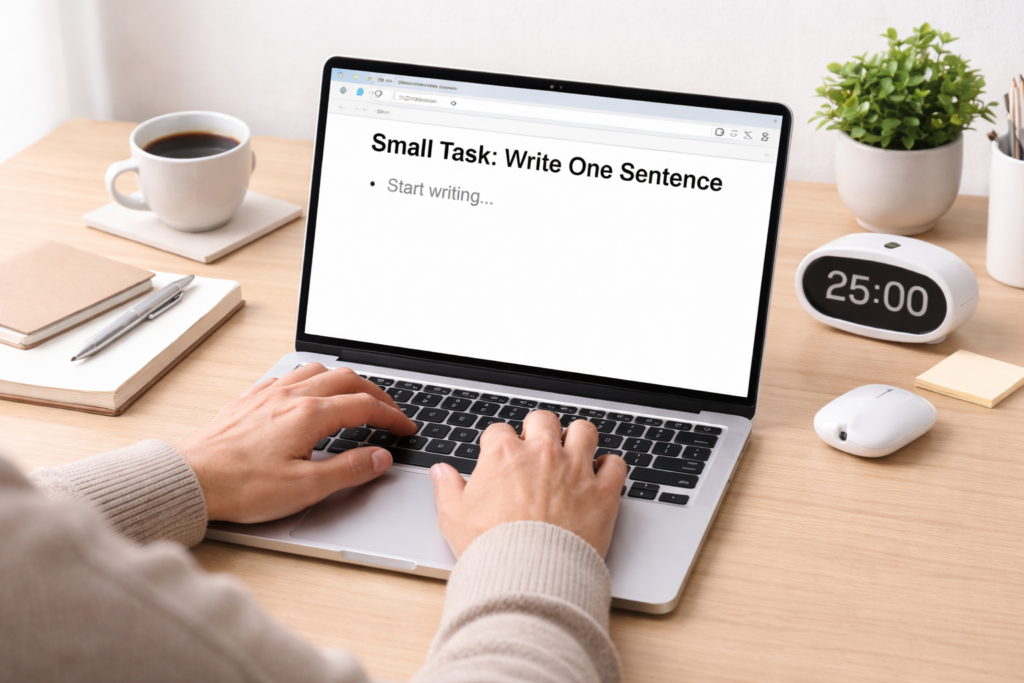
1. Start with the “2-Minute Rule”
Make the task so small that it feels easy to start.
Instead of:
- “Write a full report”
Start with:
- “Write one sentence”
Starting removes resistance, and once you begin, momentum builds naturally.
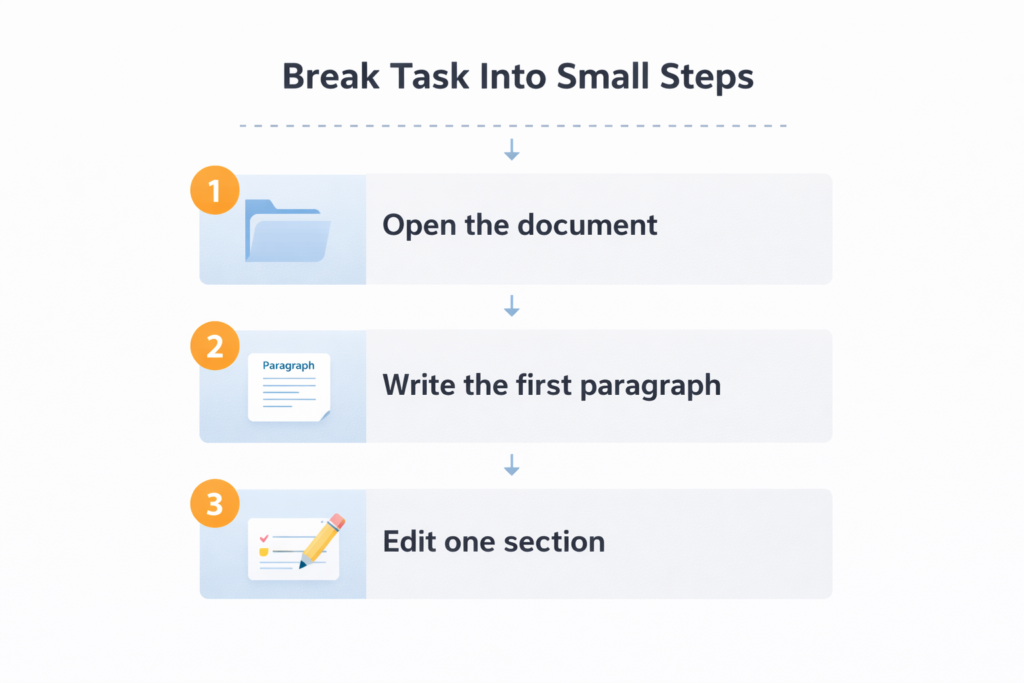
2. Break Tasks into Smaller Steps
Big tasks create overwhelm.
Break them into clear steps:
- Open the document
- Write the first paragraph
- Edit one section
Small steps make the task feel manageable.
3. Remove Distractions
Your environment matters more than motivation.
Try:
- Putting your phone away
- Closing unnecessary tabs
- Working in a quiet space
Less distraction = better focus.
4. Use Time Blocks
Instead of working endlessly, set a timer.
Example:
- Work for 25 minutes
- Take a 5-minute break
This makes work feel shorter and easier to start.
5. Focus on Progress, Not Perfection
Waiting for the “perfect” moment leads to delay.
Instead:
- Start messy
- Improve later
Done is better than perfect.
6. Reward Yourself
Your brain loves rewards.
After completing a task, give yourself something small:
- A break
- A snack
- A short walk
This reinforces productive behavior.
A Simple System You Can Use Today
If you want a quick fix, follow this:
- Pick one task you’ve been delaying
- Break it into the smallest possible step
- Work on it for just 2 minutes
- Remove distractions
- Continue for one short session
This is often enough to break the procrastination cycle.
Common Mistakes to Avoid
- Waiting to feel motivated
- Trying to do everything at once
- Being too hard on yourself
- Overcomplicating simple tasks
Keep it simple and consistent.
FAQ
Why do I procrastinate even when I know it’s important?
Because your brain prioritizes comfort and immediate rewards over long-term benefits.
Is procrastination a bad habit or a mental issue?
It’s usually a behavioral pattern linked to emotions, not laziness.
Can procrastination be fixed permanently?
Yes, by building better habits and using simple systems consistently.
What is the fastest way to stop procrastinating?
Start with a very small task. Action reduces resistance immediately.
Procrastination is not about being lazy—it’s about how your brain responds to discomfort.
Once you understand this, you can use simple techniques to take action faster, stay focused, and build better habits.
Start small, take action, and you’ll break the cycle.