

A realistic food-choice scene showing how sweet drinks and desserts can compete with healthier options in everyday life.
Sugar is not automatically bad. Your body can use carbohydrate for energy, and natural sugars in whole fruit or milk come with water, fibre, protein and nutrients. The problem starts when too much free or added sugar becomes a daily habit.
When you eat too much sugar, your blood sugar may rise and fall quickly. As a result, you may feel hungry again, crave more sweet food, gain weight over time, damage teeth and increase your risk of long-term health problems. This guide explains the sugar effects clearly, with practical steps you can use today.
What Is Sugar and Why Do We Crave It?
Sugar is a type of carbohydrate. It appears naturally in foods such as fruit and milk, but it is also added to processed foods and drinks to improve taste, texture and shelf life.
The sugars to watch most closely are free sugars and added sugars. These include table sugar, syrups, honey, fruit juice concentrates, sugary drinks, sweets, cakes and many sweetened breakfast foods.
You crave sugar because sweet foods activate the brain’s reward system. For example, a chocolate bar after a stressful shift can feel like a quick comfort. However, that quick reward can train you to want the same fix again tomorrow.
A practical first step is simple: do not try to remove every sweet food. Instead, identify the 1-2 daily items that add the most sugar, such as fizzy drinks, sweet coffees or biscuits after dinner.
Also read: What Happens If You Drink More Water Every Day
Why Too Much Sugar Causes Energy Spikes and Crashes
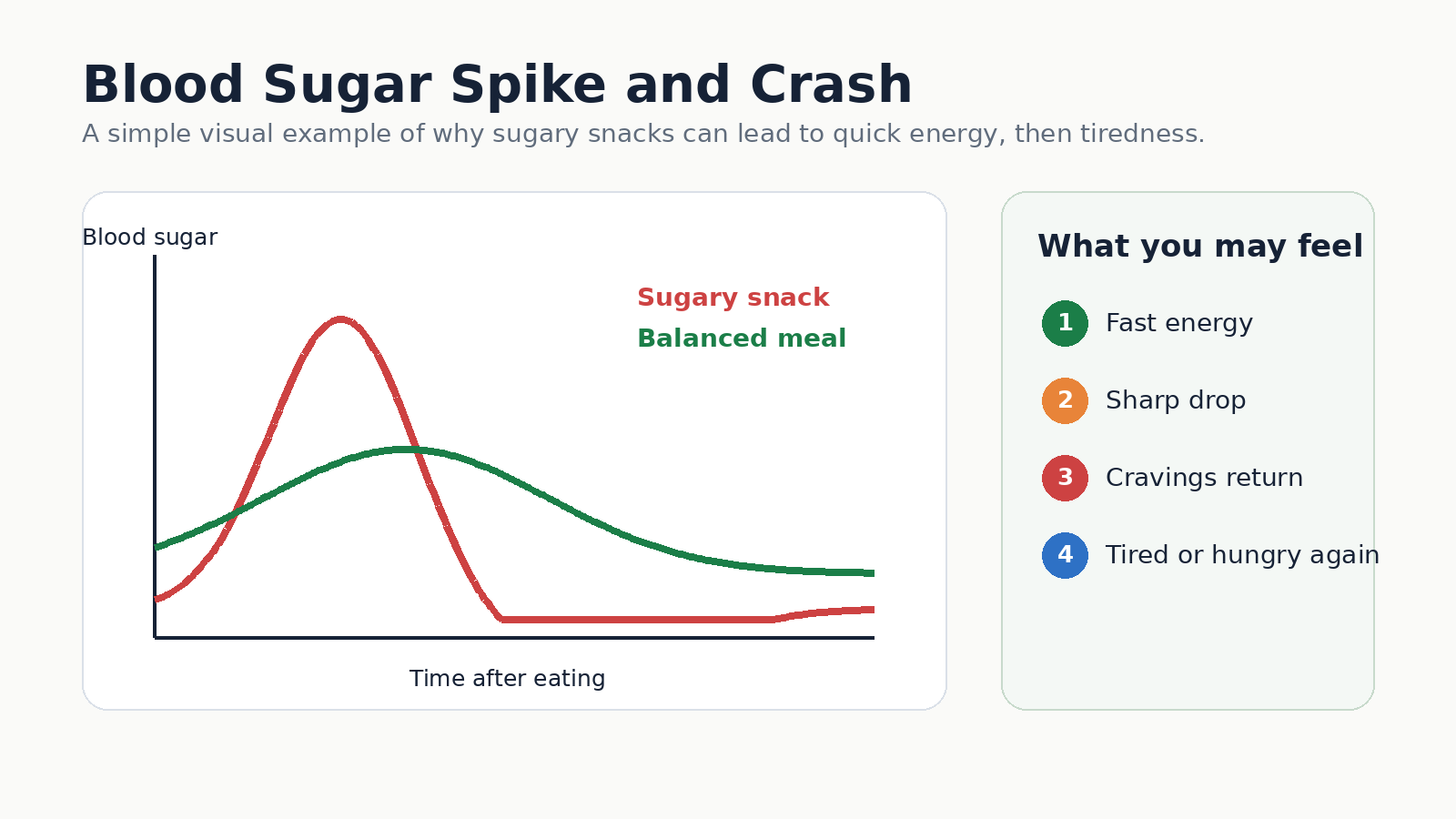
Informative visual showing how a sugary snack can create a sharp rise and later crash in energy.
After a sugary snack or drink, glucose enters your bloodstream quickly. Your body then releases insulin, a hormone that helps move glucose from the blood into cells.
If the rise is sharp, the drop can also feel sharp. Therefore, you may feel alert for 20-30 minutes, then tired, hungry or distracted later. Many people mistake this crash for lack of willpower, but it is often a normal body response.
For example, drinking a large sweetened coffee with a pastry may give fast energy at 9am. By 11am, you may want another snack. In contrast, Greek yoghurt with berries and oats is slower because it includes protein and fibre.
This does not mean you must fear sugar. It means sugary foods work better as occasional extras, not as your main fuel source.
How Sugar Affects Weight, Teeth and Long-Term Health
Too much sugar can add extra calories without keeping you full. Sugary drinks are especially easy to overconsume because liquid calories do not fill you up like a balanced meal.
In addition, sugar feeds bacteria in the mouth. These bacteria produce acids that can damage tooth enamel. Because of this, frequent sipping or snacking can be worse for teeth than one planned sweet treat with a meal.
Long term, high intake of sugary drinks and added sugars is linked with weight gain, type 2 diabetes, heart disease and tooth decay. These risks usually build slowly, so the damage may not feel obvious at first.
A simple scenario helps. If someone drinks one soda most days, that can add roughly 140-160 calories daily. Over a month, that is about 4,200-4,800 extra calories before counting cakes, sauces or sweet coffees.
How Much Sugar Is Too Much?
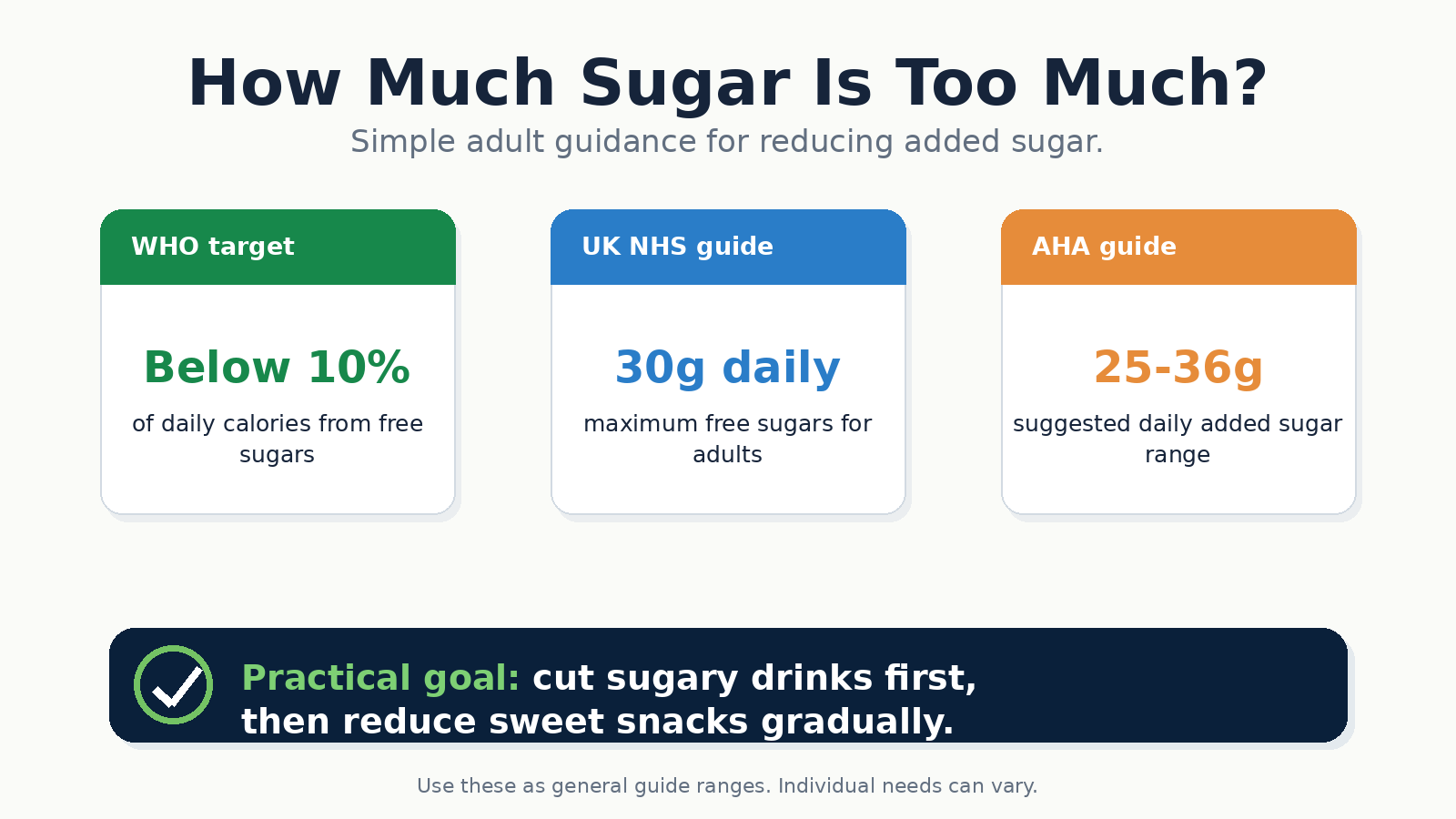
Checked infographic summarising common sugar-intake guidance from major health organisations.
The World Health Organization recommends keeping free sugars below 10% of daily energy intake, with possible extra benefits below 5%. In the UK, the NHS says adults should have no more than 30g of free sugars a day.
The American Heart Association gives a stricter added-sugar guide: about 25g per day for most women and 36g for most men. These numbers are not meant to scare you. They give you a practical target.
For a realistic daily check, look at your usual drinks first. A 330ml can of cola can contain around 35g of sugar, which may exceed a whole adult daily free-sugar guide in one drink.
Instead of counting perfectly, use ranges. Aim to reduce added sugar by 20-30% over the next month. For example, swap 5 sugary drinks per week for 2, then reduce again once the habit feels normal.
How to Spot Hidden Sugar on Labels
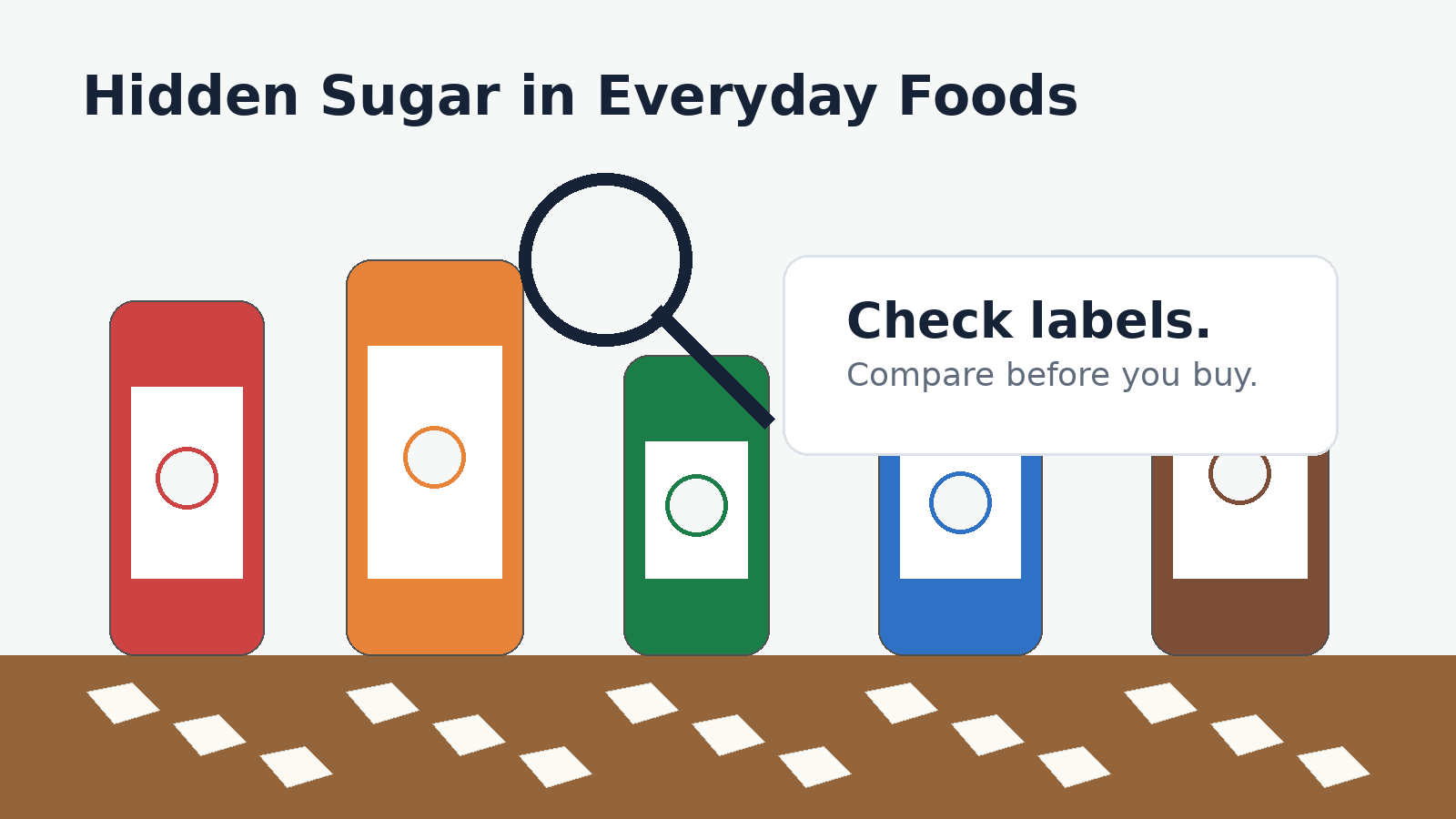
Everyday packaged foods can contain hidden sugar, so labels are often more useful than front-pack claims.
Sugar can hide under several names. Look for words such as sucrose, glucose, fructose, syrup, maltose, dextrose, fruit juice concentrate, molasses and honey.
Also check the nutrition panel. On UK labels, ‘of which sugars’ tells you total sugar, but it does not always separate natural sugar from free sugar. Therefore, the ingredients list matters too.
A practical shopping rule is to compare two similar products. For example, compare two yoghurts, cereals or sauces. Choose the one with lower sugar per 100g if the portion size is similar.
This works because you are not relying on front-pack marketing. Words like natural, light or organic do not always mean low sugar.
Smart Tools That Help You Reduce Sugar
Apps can help, but they should support your judgement rather than replace it. Use them for awareness, label scanning and tracking patterns for 7-14 days.
Global: MyFitnessPal – simple food and calorie logging; Cronometer – detailed nutrient tracking; Yuka – quick barcode scans and product ratings.
United States: MyFitnessPal – large food database; Fooducate – label scanning and food grades; Cronometer – strong micronutrient detail.
United Kingdom / Europe: NHS Food Scanner – sugar, salt and fat checks; Yuka – barcode scanning for packaged foods; Open Food Facts – open food database.
Advanced users: Cronometer – detailed macros and micronutrients; Google Sheets – custom sugar tracker; Apple Health or Google Fit – connect habits with activity trends.
Keep it simple. Track your biggest sugar sources for one week, then change the top 1-2 items first.
How to Cut Down Without Feeling Deprived
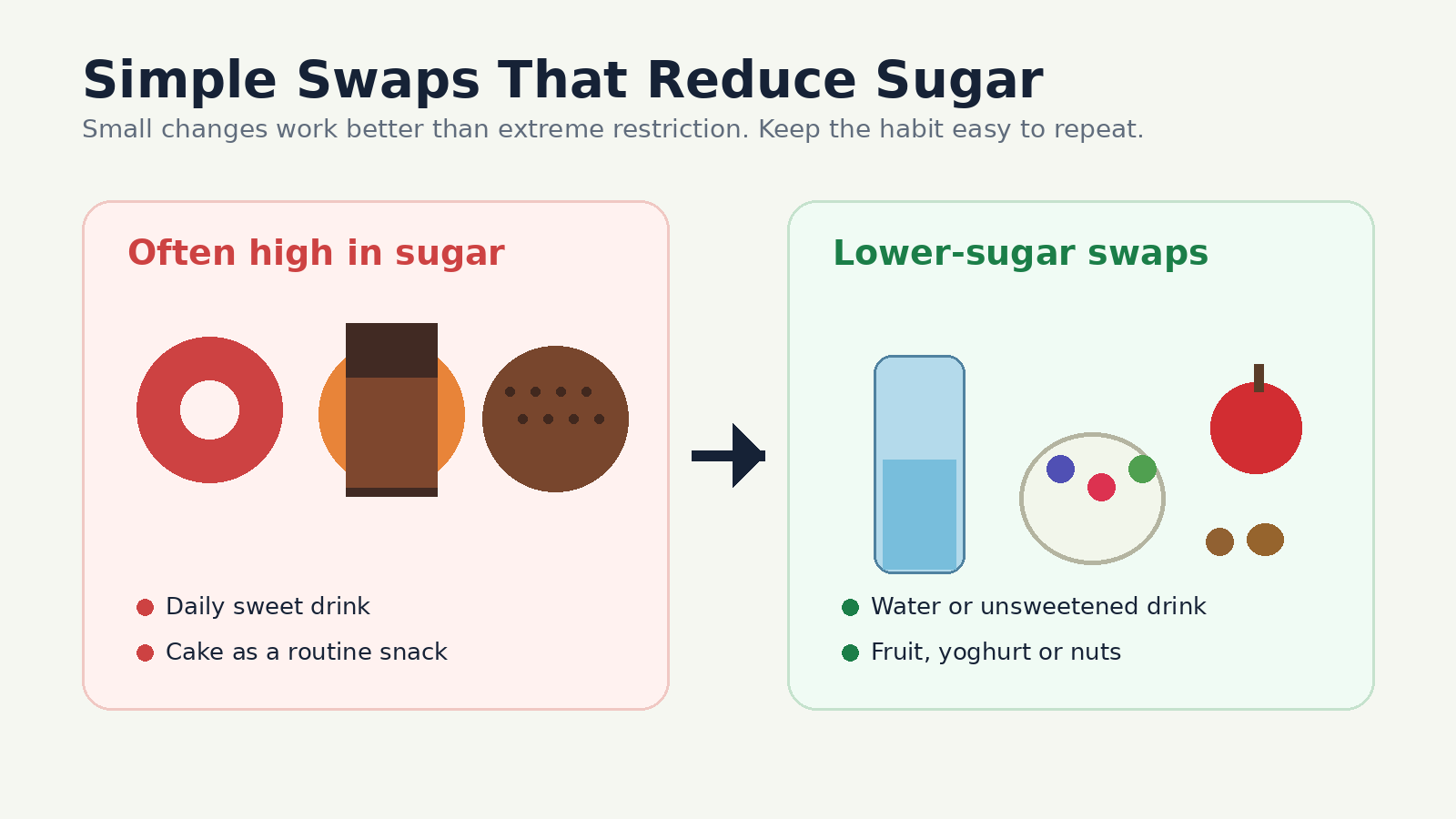
Practical lower-sugar swaps that reduce daily sugar intake without making meals feel boring.
The best sugar-reduction plan is not punishment. It is a system that makes better choices easier. Start with your routine, not your motivation.
First, reduce sweet drinks. Switch from full-sugar soda to water, sparkling water or unsweetened tea. If that feels hard, mix half regular and half diet or reduce from daily to 3-4 times per week.
Second, add protein or fibre to snacks. For example, choose yoghurt with berries, eggs on toast, nuts with fruit or hummus with vegetables. These options help you feel full longer.
Third, keep sweets planned rather than random. If you want dessert, have it after a meal instead of grazing for hours. This reduces repeated sugar exposure to your teeth and helps control portions.
Finally, improve your environment. Keep fruit visible, put biscuits out of sight and avoid buying multipacks if you know they disappear in two days.
Why Small Sugar Changes Add Up Fast
Small changes can make a big difference because sugar habits repeat often. A daily sweet coffee, fizzy drink and evening snack may not look dramatic separately, but together they can dominate your free-sugar intake.
For example, replacing one $4 sweet coffee with a lower-sugar drink 5 days a week can save about $80 monthly. More importantly, it can reduce a daily sugar spike that may affect hunger and energy.
Similarly, reducing sugary snacks by 20-30% is more realistic than banning them completely. You still enjoy food, but you stop letting sugar control your routine.
Also read: How Your Gut Health Affects Your Mood and Mental Performance
Conclusion: Keep Sugar Occasional, Not Automatic
Too much sugar can affect your body through energy crashes, cravings, dental damage, weight gain and higher long-term health risk. However, you do not need a perfect diet to improve your health.
Start with the biggest source: drinks, snacks, sweet coffees or breakfast foods. Then make one realistic swap this week. Check labels, use simple tools if helpful and aim for progress you can repeat.
Your next step is practical: choose one sugary habit, reduce it by 20-30%, and replace it with something you still enjoy. That is how better health becomes easier to maintain.
FAQ
What happens if you eat too much sugar every day?
Eating too much sugar every day can cause energy crashes, cravings, tooth decay and weight gain. Over time, high added sugar intake is also linked with type 2 diabetes and heart disease.
Is fruit sugar bad for you?
Whole fruit is usually not the problem because it contains fibre, water and nutrients. The bigger concern is free sugar from sugary drinks, sweets, cakes, syrups and fruit juice.
How long does a sugar crash last?
A sugar crash can happen within 1-3 hours after a high-sugar snack or drink. The exact timing depends on the meal, your activity level and your individual metabolism.
How can I reduce sugar cravings naturally?
Eat balanced meals with protein and fibre, sleep well, drink water and reduce sugary drinks gradually. Cravings often improve when blood sugar is steadier.
How much sugar should adults have per day?
UK guidance says adults should have no more than 30g of free sugars daily. WHO recommends keeping free sugars below 10% of daily energy, with possible extra benefit below 5%.